


Despite facing challenges, Rafael Nadal's relentless spirit and tactical brilliance have solidified his status as one of tennis's greatest. Join us as we explore Nadal's journey at the French Open, from his early victories to his enduring legacy.
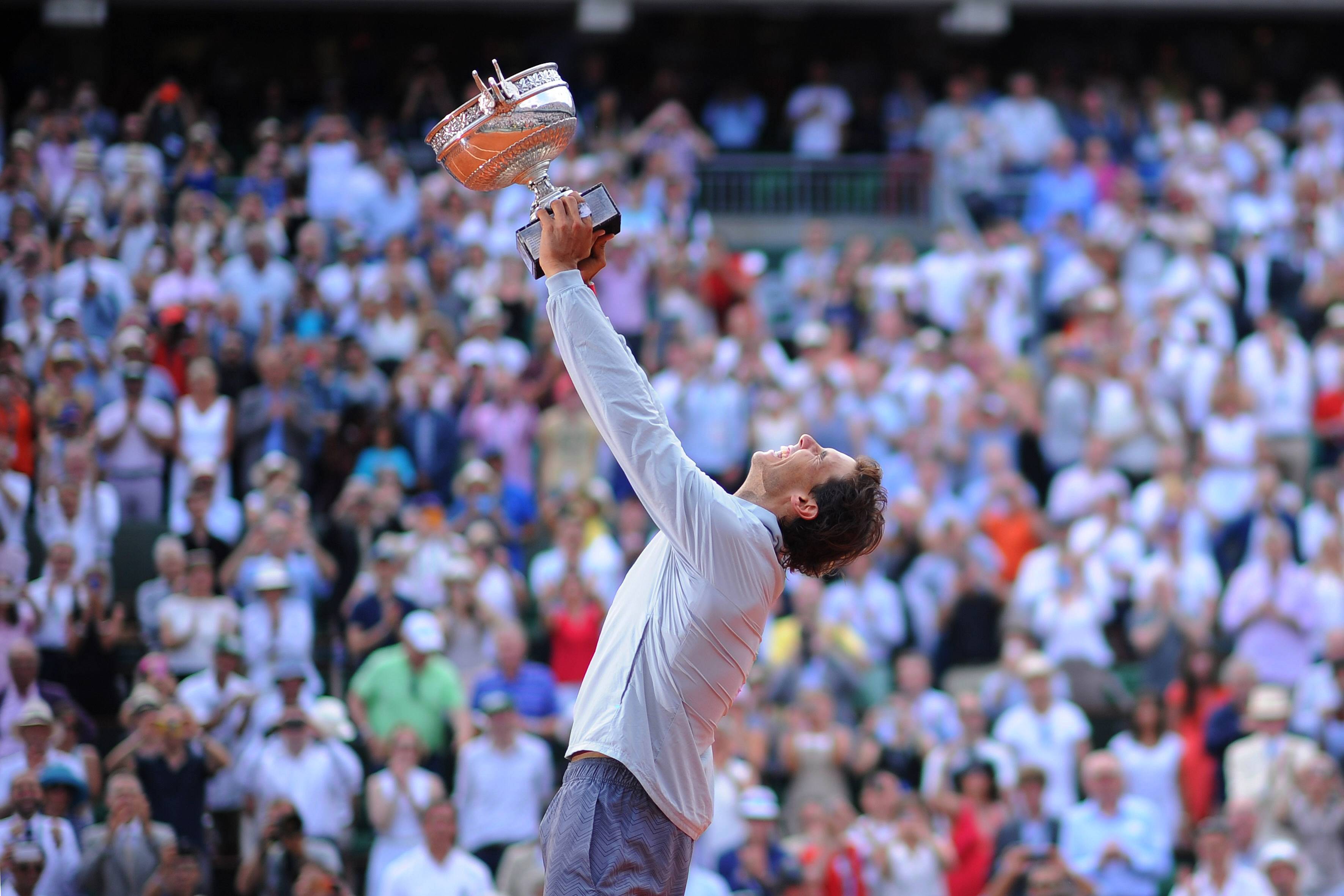
Visual Story: The Journey of Rafael Nadal at Roland Garros
By Esin Karakaş & Fatemeh Roshan – When it comes to clay courts in tennis history, one name consistently comes to mind for tennis enthusiasts: Rafael Nadal. Often hailed as the “King of Clay,” Nadal has a storied history with the French Open, also known as Roland Garros. His record at this challenging Grand Slam tournament is unparalleled, redefining mastery on clay. A fourteen-time champion, Nadal’s career is marked by groundbreaking athleticism, relentless spirit, and tactical brilliance.
Since 2005, when he claimed his first victory, Nadal’s career through Roland Garros has been punctuated by remarkable victories and a few notable defeats, creating a legacy that stands out in tennis history. Despite facing some physical challenges this year, Nadal remains committed to competing in the French Open 2024. As he has stated, according to the tennis news website Tennis Infinity, the injury is “not probably yet enough to say not playing,” and he believes it is “the most important event of my tennis career.” In this article, we take a detailed look at Rafael Nadal’s journey through the years at the French Open.
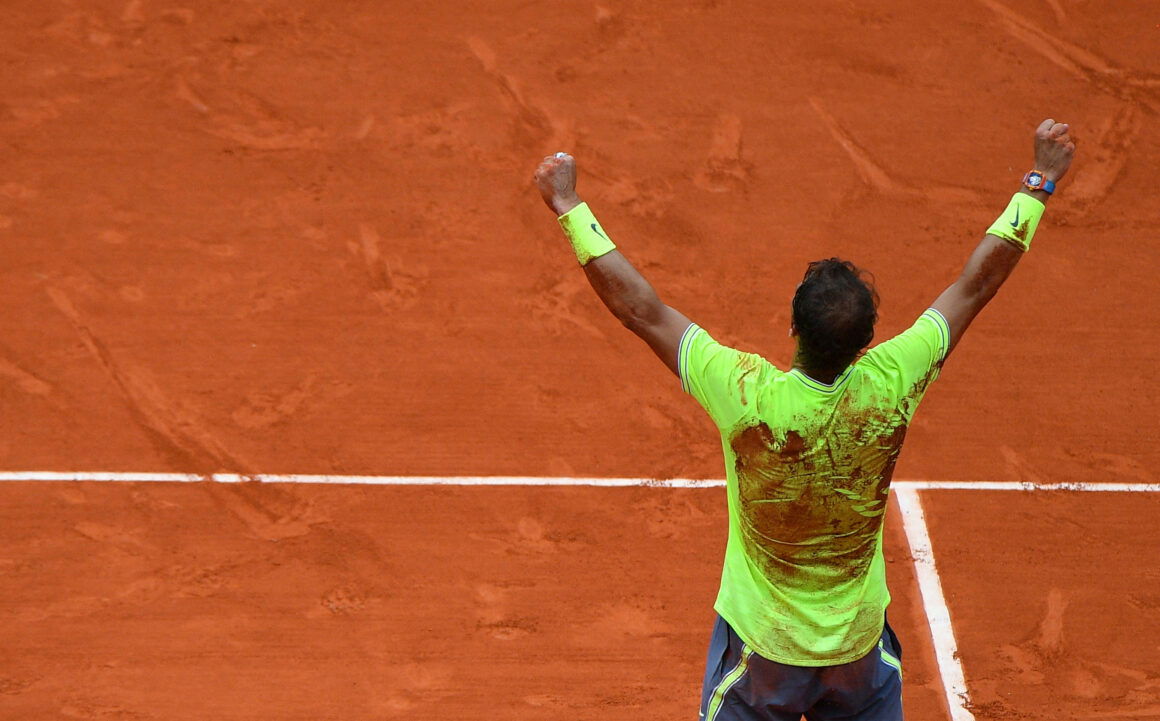
Early Beginnings and Rapid Rise
Rafael Nadal burst onto the world stage in the early 2000s with a ferocity that was soon to become his hallmark. By 2005, when he was 19, Nadal won his first French Open title which also signalled the beginning of a new era in clay-court tennis.
Over the years, Nadal’s relationship with the French Open has grown into one of the most storied narratives in tennis. As of 2023, Nadal has amassed an unprecedented 14 French Open titles, a record for any player at a single Grand Slam tournament.
Why Is Rafael Nadal Successful in Clay-Court Tennis?
Nadal’s success on clay can be attributed to a combination of physical prowess, mental resilience, and technical adaptability. His playing style is perfectly suited to the slow, high-bouncing surfaces of clay courts. Also, Nadal’s ability in fast and smart movements makes it hard to win against him. Nadal’s heavy topspin forehand is a critical weapon, pushing opponents far behind the baseline and creating acute angles that are nearly impossible to counter. Moreover, his ability to slide and recover on clay allows him to sustain points until an opportunity arises to strike a winning blow.
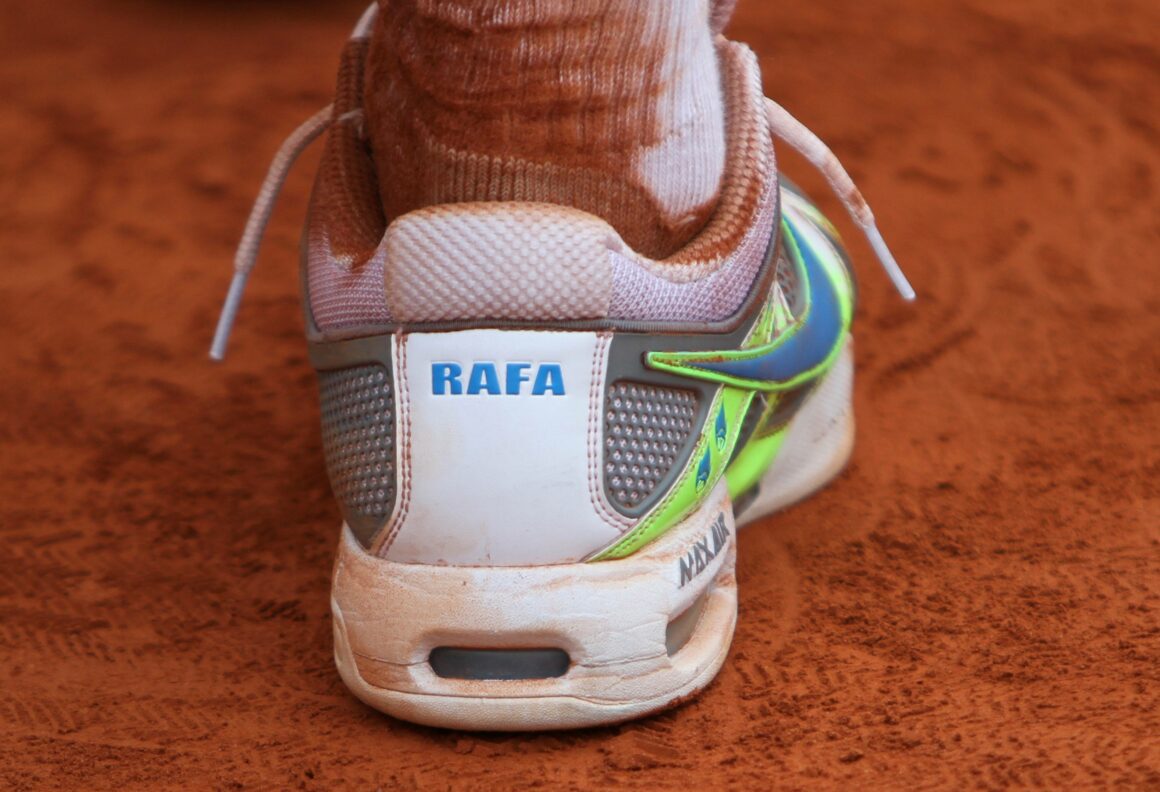
Memorable Matches at the Roland Garros
Among his numerous French Open victories, several stand out for their intensity and historical significance. His first win in 2005 set the stage, but it was his 2008 final against Roger Federer where Nadal showcased his clay-court prowess most emphatically, losing only four games in a masterclass performance. Another memorable match was the 2013 semi-final against Novak Djokovic, a five-set thriller that is often cited as one of the greatest clay court matches ever played.
Challenges and Comebacks
Despite his dominance, Nadal’s journey has not been without challenges. Injuries have plagued him throughout his career, with his knees and wrist often bearing the brunt of his physically demanding style of play. Yet, Nadal’s comebacks have been as remarkable as his setbacks. Each return to Roland Garros after an injury has been a reaffirmation of his resilience, with victories that underscore his never-say-die attitude. Something that seems to be happening again this year at the French Open 2024, and we should see how the story goes for him this time.
You can see Rafael Nadal’s career timeline at the French Open or Roland Garros in a visual timeline from the IMAGO archive.
2005 – The First Triumph
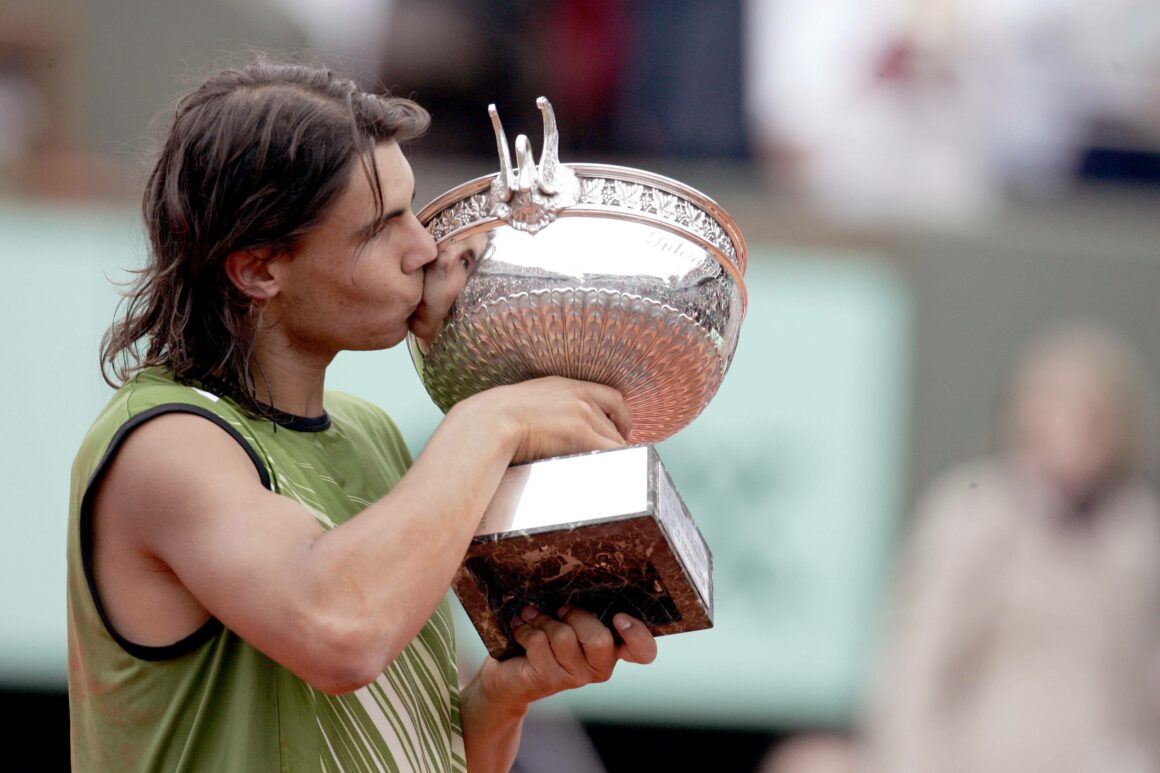
2005: At just 19 years old, Nadal won his first French Open title on his debut, defeating Mariano Puerta in the final. This victory announced his arrival on the world stage and marked the beginning of his dominance on clay.
Establishing Dominance
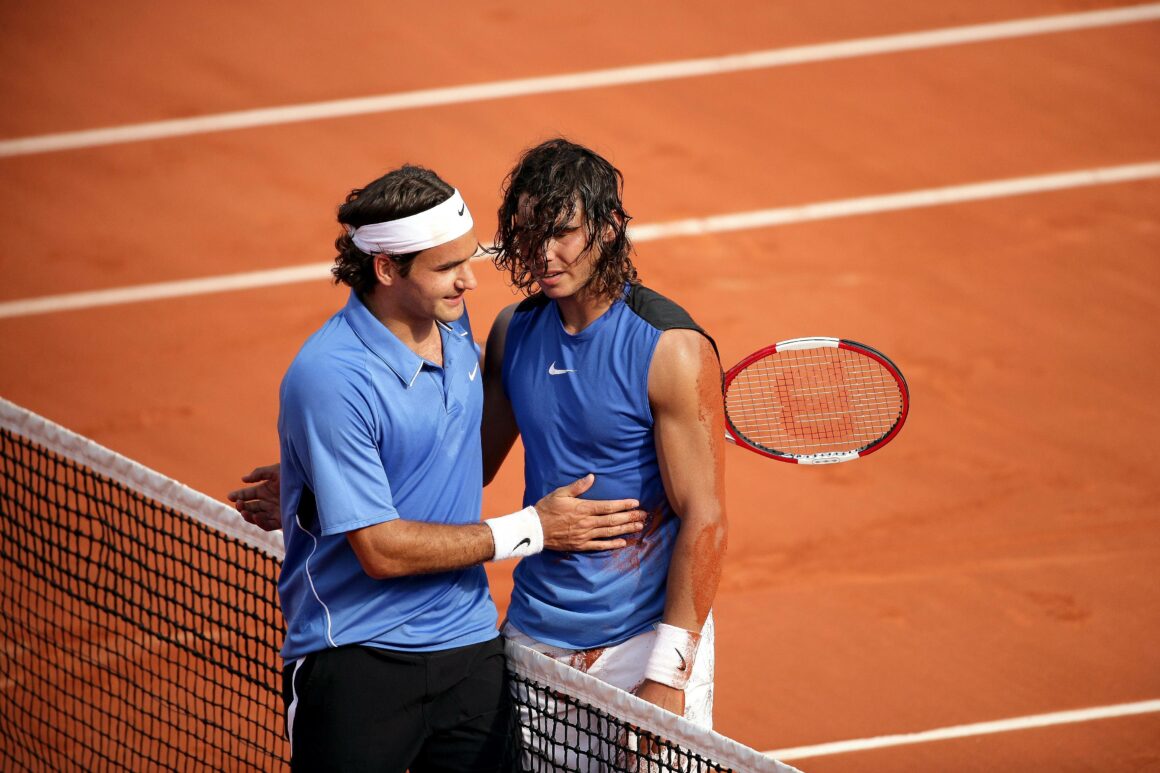
2006: Nadal successfully defended his title, overcoming Roger Federer in the final. This win was significant as it set up one of the greatest rivalries in tennis history.
2007: Nadal faced Federer again in the final and won, securing his third consecutive French Open title.
2008: Nadal delivered one of the most dominant performances ever seen at Roland Garros, losing no sets throughout the tournament and winning against Federer in the final 6-1, 6-3, 6-0.
Brief Setbacks and Resounding Comebacks
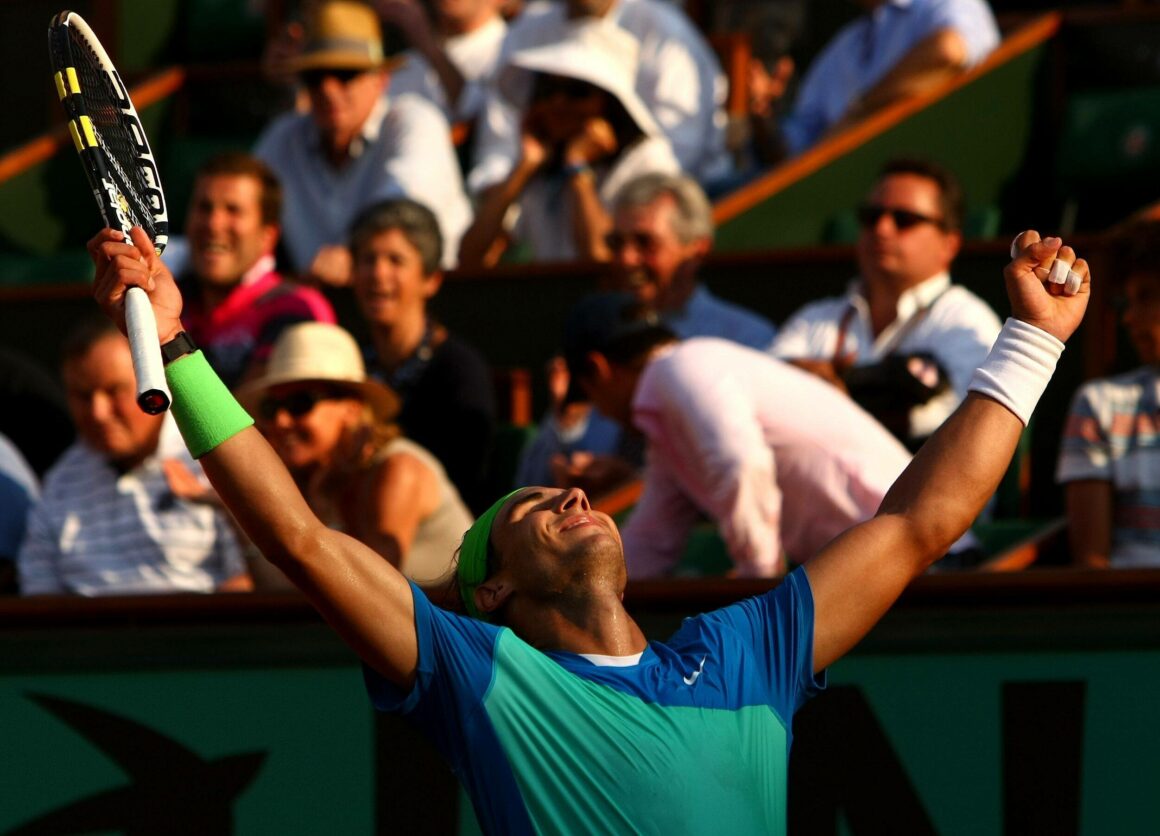
2009: In a shocking turn of events, Nadal was defeated in the fourth round by Robin Soderling. This loss ended his 31-match winning streak at Roland Garros.
2010: Nadal reclaimed the French Open title, avenging his previous defeat by beating Soderling in the final. This victory was also part of Nadal’s historic “Career Grand Slam,” as he won all four major titles.
Continued Excellence and Records
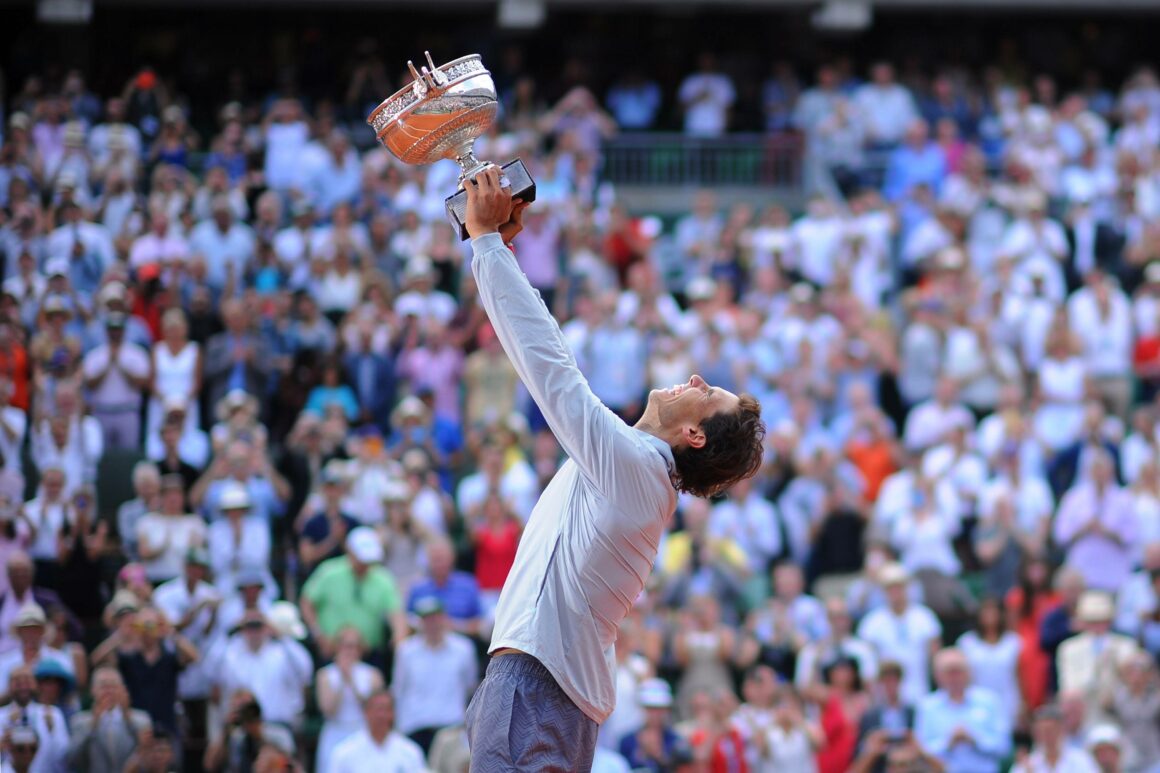
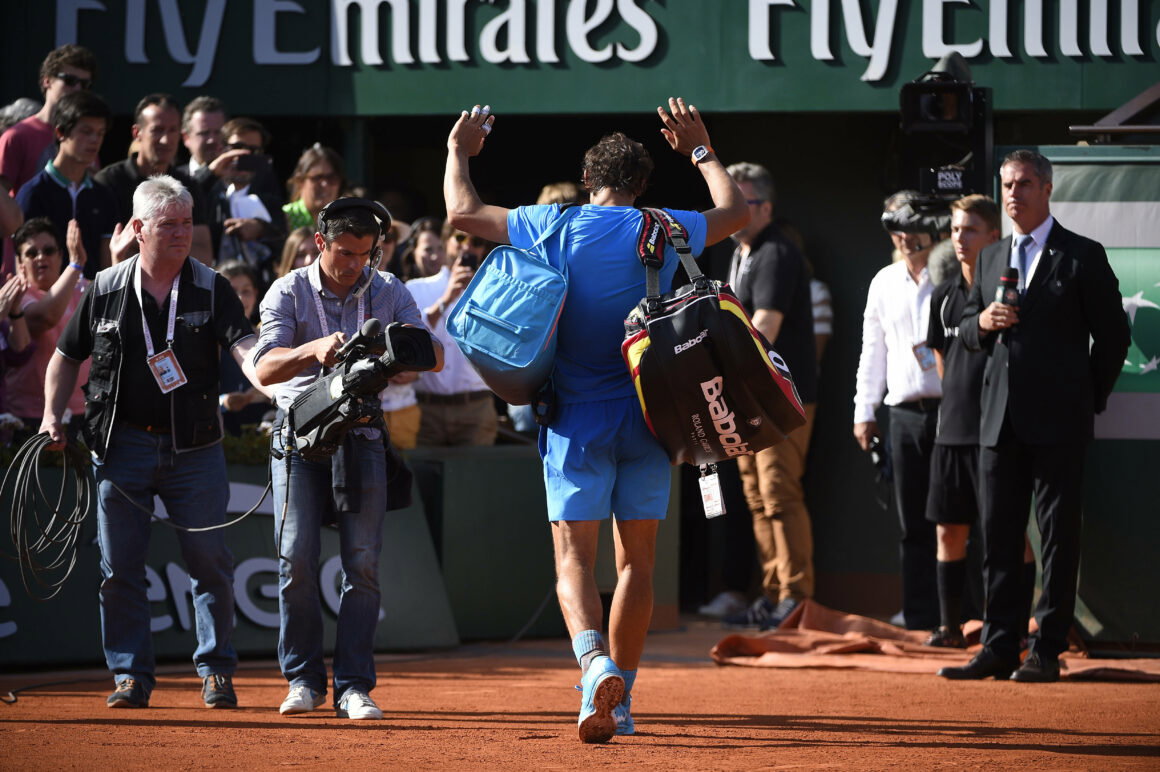
2011-2014: Nadal continued his dominance by winning the French Open four more times during this period, including a memorable victory over Novak Djokovic in the 2012 final.
2015: This year marked a rare early exit for Nadal, who lost to Djokovic in the quarterfinals.
2016: Plagued by a wrist injury, Nadal withdrew from the tournament after the second round.
Unprecedented Milestones
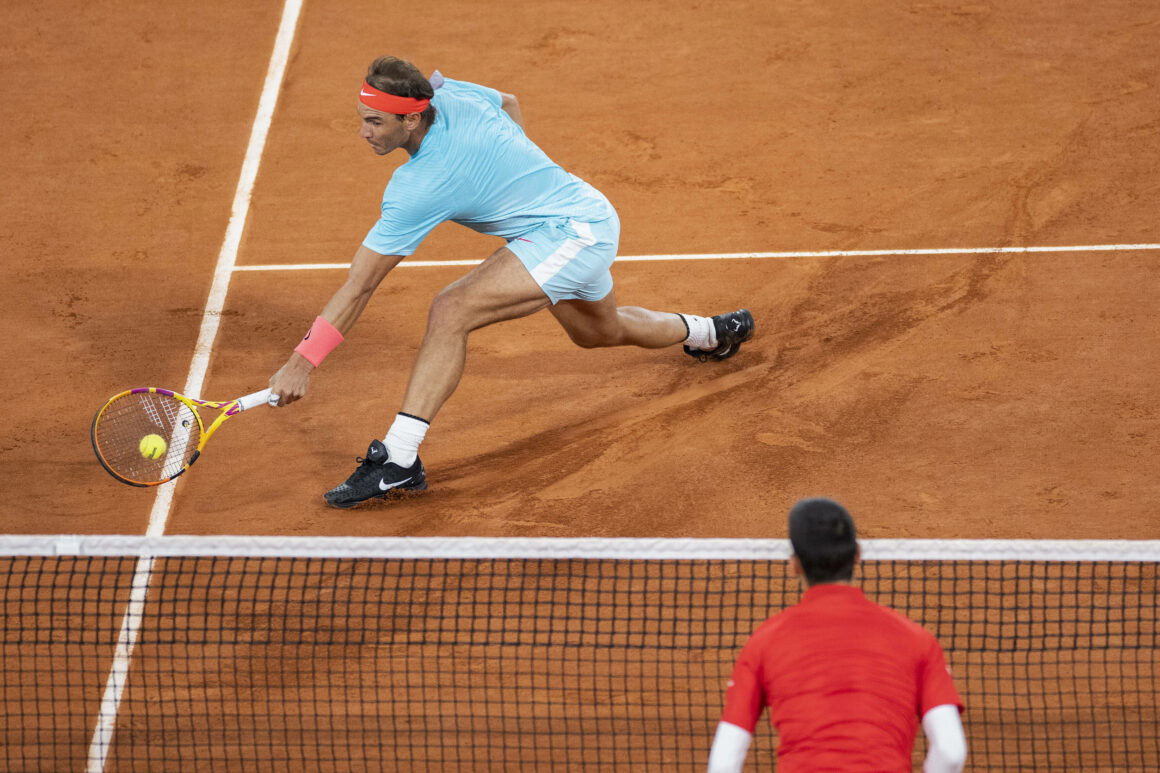
2017-2020: Nadal added four more titles to his record, including his 10th French Open victory in 2017, a historic milestone referred to as “La Décima.” In 2020, he won his 13th French Open, equaling Roger Federer’s then-record of 20 Grand Slam titles.
Recent Years
2021: Nadal was defeated by Djokovic in a semi-final epic, in what many considered a passing of the torch moment.
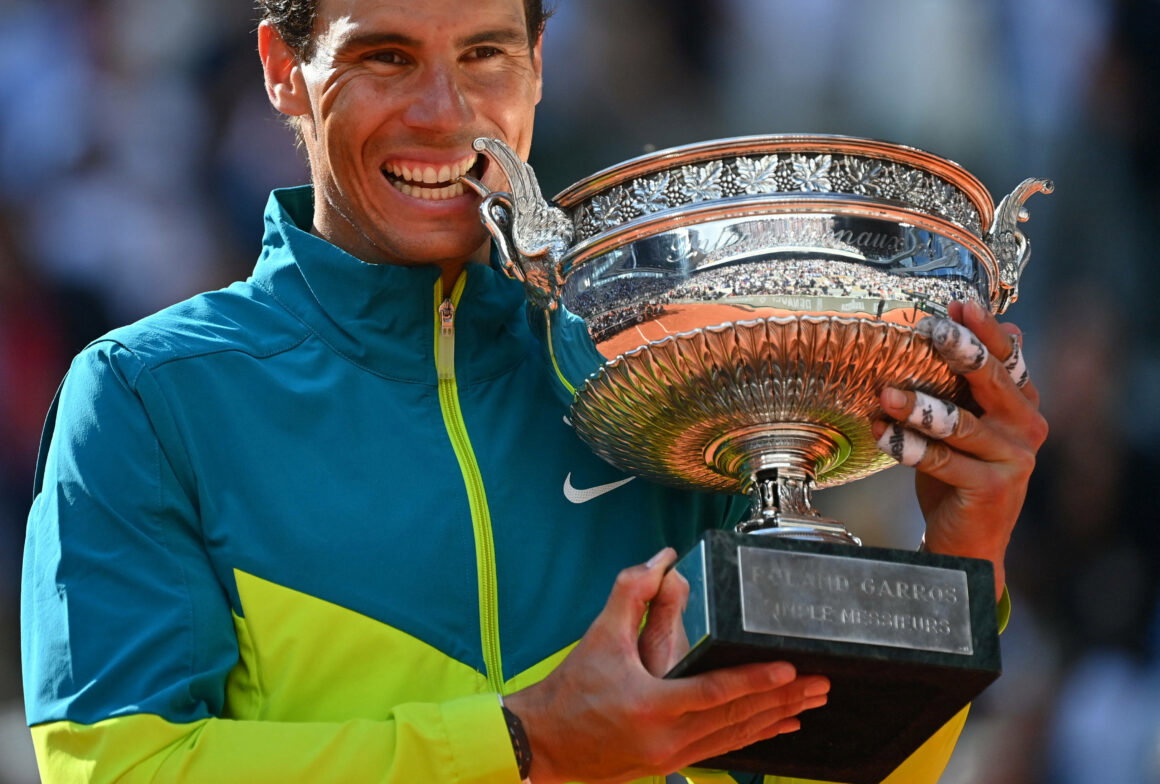
2022: Demonstrating his enduring prowess, Nadal won his 14th French Open title, defeating Djokovic along the way and overcoming Casper Ruud in the final.
2023: Due to a hip injury, Rafael Nadal did not compete in the 2023 Roland Garros.