
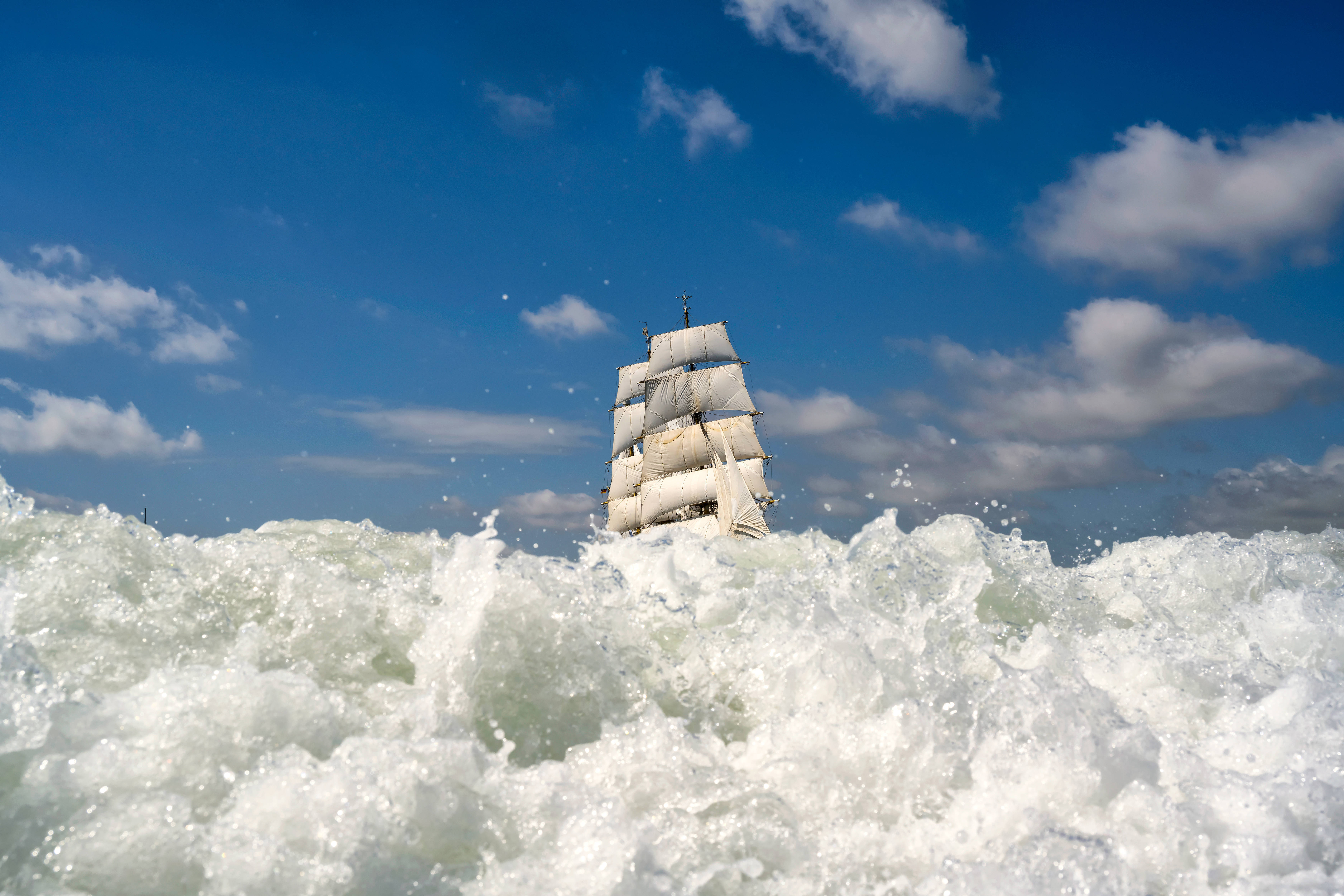
Strong winds and hundreds of vessels lining the course turned Kiel Fjord into a stage for Ocean Race Europe. Photographer Martin Vahlbruch explains how preparation and timing turn regattas into lasting images.
Sailing Photography in Kiel with Martin Vahlbruch
Sailing photography is where sport and seamanship meet the camera. It means reading wind and water like a sailor, then making clear choices in exposure, shutter speed, and framing from a moving platform.
For IMAGO photographer Martin Vahlbruch, sailing photography is a balance of preparation, positioning, and calm timing when the action lasts seconds.
In this interview, he explains how he worked during Ocean Race Europe in Kiel, gives tips on sailing photography and what it takes to translate wind, water, and crowds into images.
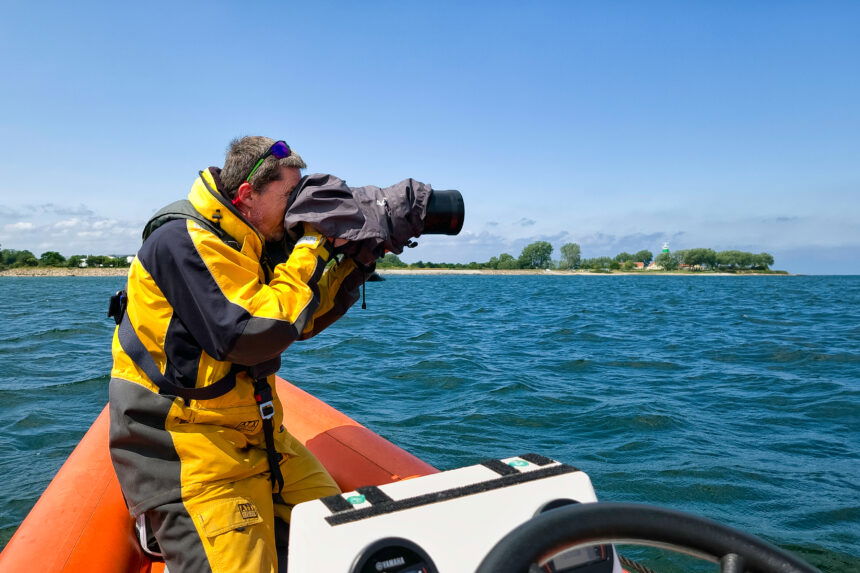
“Preparation is essential in sailing photography. Accurate weather information for the exact time and location is the starting point.” – Martin Vahlbruch.
The Ocean Race Europe in Kiel brought together world-class teams and intense conditions. What was your experience photographing this year’s competition?
This year was much more intense than other regattas I have covered in Kiel. Access was limited and accreditation came very late, so preparing was difficult. Thanks to Kiel Marketing e.V. and also my own network, I was able to get on a boat, which allowed me to position myself well for the start.
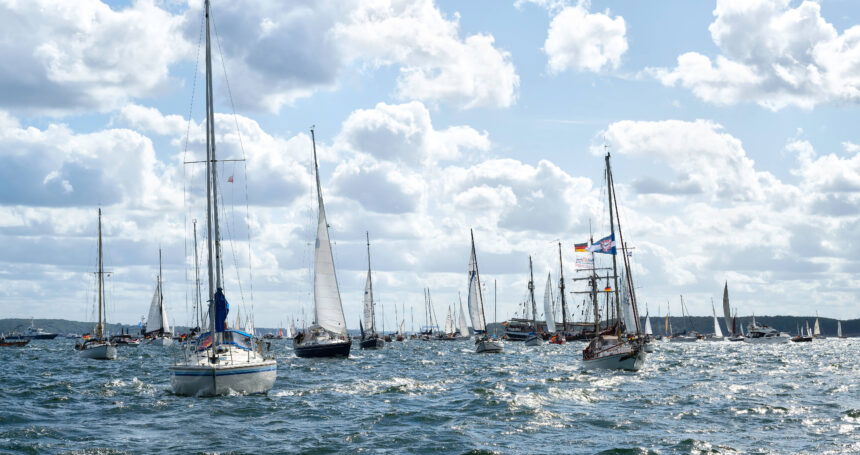
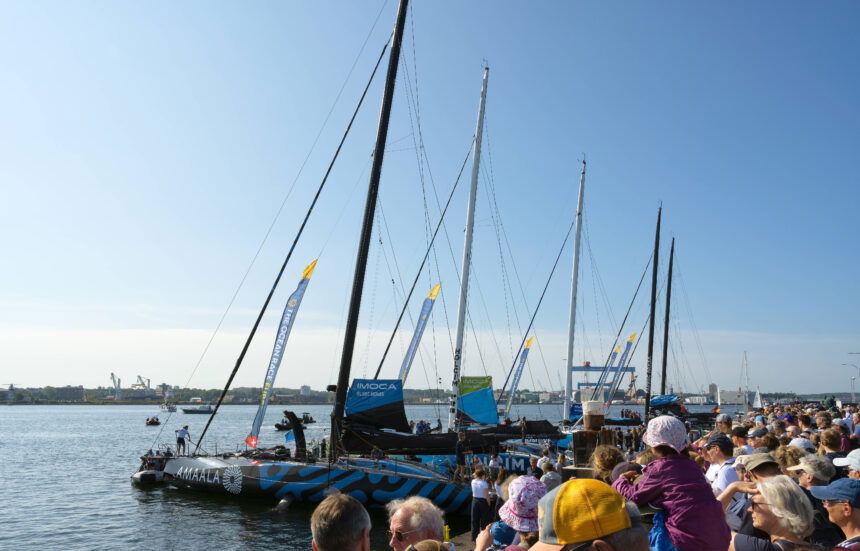
On the water, there were around 2,500 spectator boats, and with strong winds, they kept drifting into the racecourse. The safety boats struggled to control the situation, the start was delayed, and then it happened very suddenly. Because of the wind, the racers were in front of my lens for only about 90 seconds before they were gone.
From a photographic point of view, that made it extremely challenging. I had to work with full concentration in a very short time to capture sharp, clear images that still conveyed the speed and drama of the race.
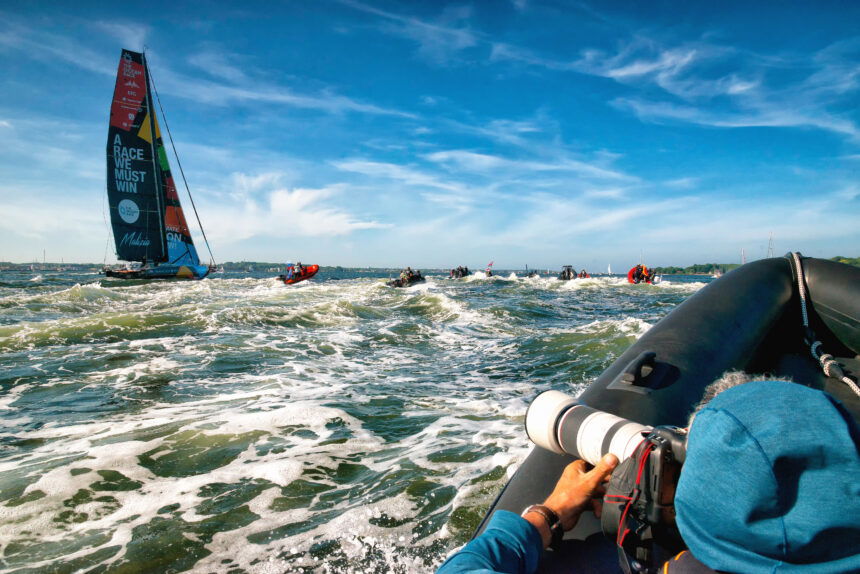
“In sailing photography beyond equipment, it is crucial to understand sailing itself. Knowing the rules, maneuvers, and how boats will react to wind and waves allows you to anticipate the decisive moments.” – Martin Vahlbruch.
Events like this have a special atmosphere both on and off the water. How did you approach capturing the competition as well as the spirit of the crowd in Kiel?
What all sailing events in Kiel have in common is the great enthusiasm and affection people here have for the sport. Big events like this always draw huge crowds. Compared to other sports, the spectators at Kiel’s sailing regattas are especially friendly, knowledgeable, and fair.
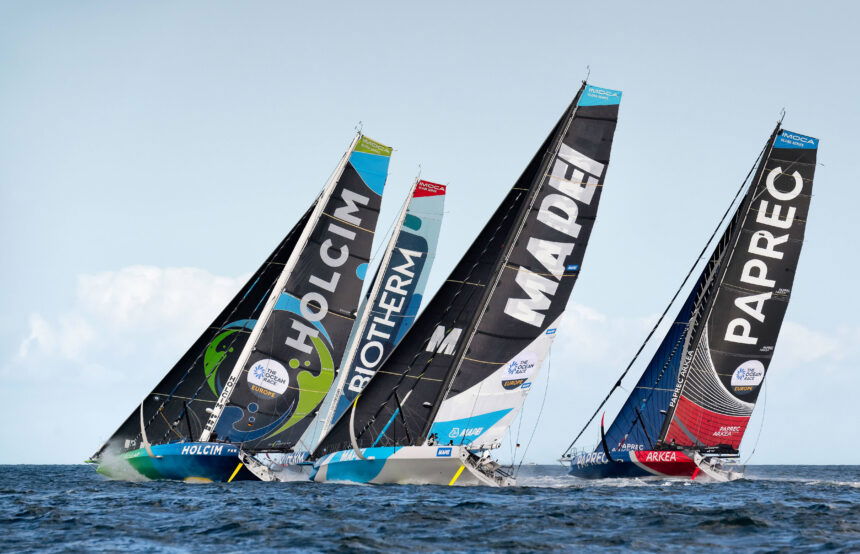
The applause for the crews of Holcim PRB and Allegrande Mapei, even though both teams had to retire after a collision, was a powerful moment that expressed the spirit of Kiel. The audience responded with respect and support.
Kiel simply loves to celebrate sailing, and this event was no exception. As someone from Kiel and a sailor myself, I admit I am not entirely neutral, but that passion and warmth for the sport is something you always feel here and something I always try to reflect in my pictures.
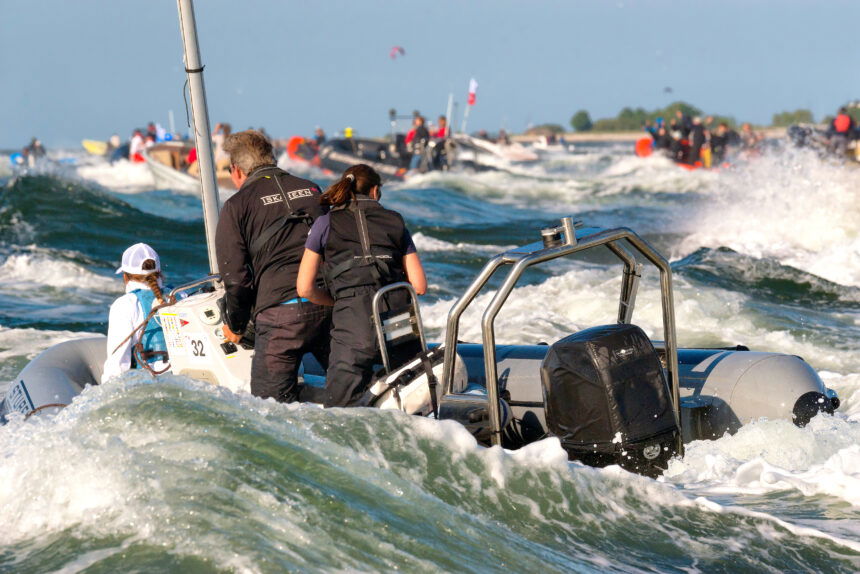
Sailing offers dramatic backdrops but also unpredictable conditions. How do you prepare for and adapt to the challenges at sea?
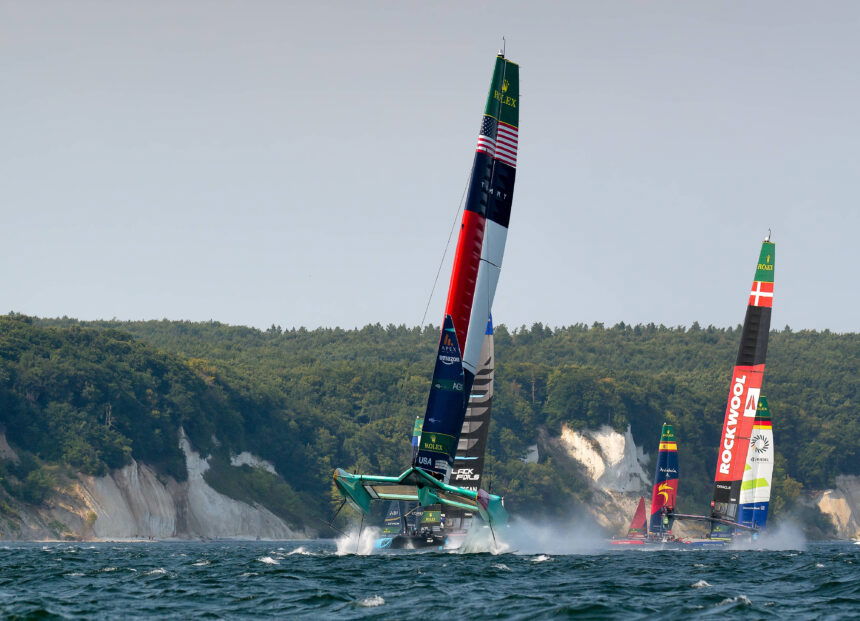
Preparation is essential in sailing photography. Accurate weather information for the exact time and location is the starting point. Knowing the wind direction, for example, helps anticipate how the start line will be set and which course the boats are likely to take. During the Ocean Race in Kiel, strong westerly winds meant the start line was placed more on the western side, different from what was originally expected, and so I was lucky to capture the action.
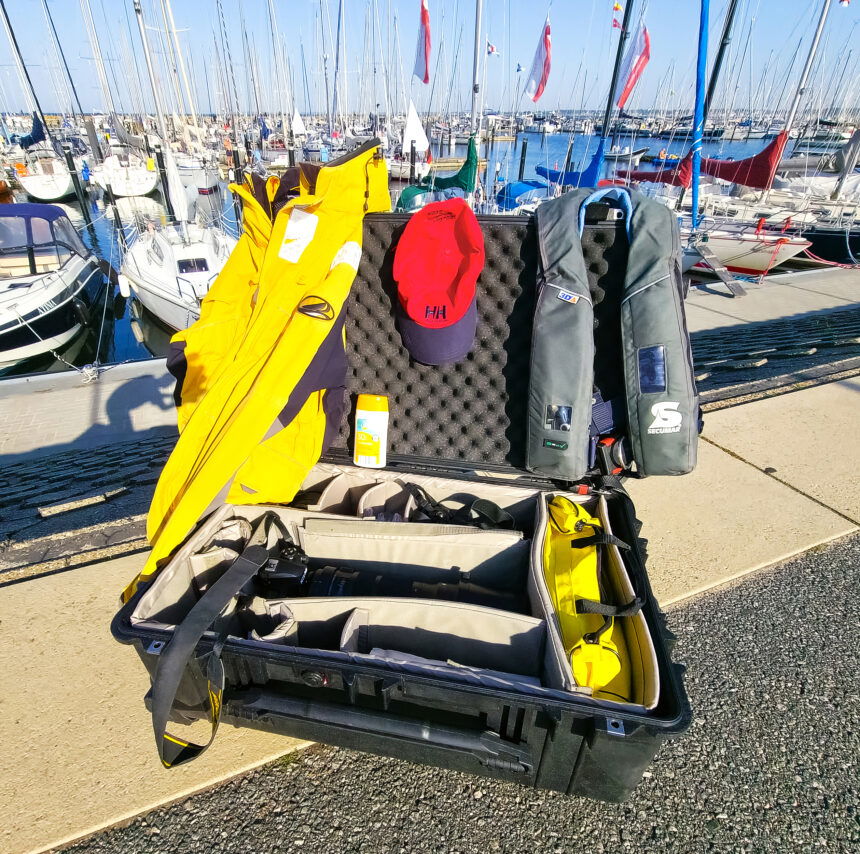
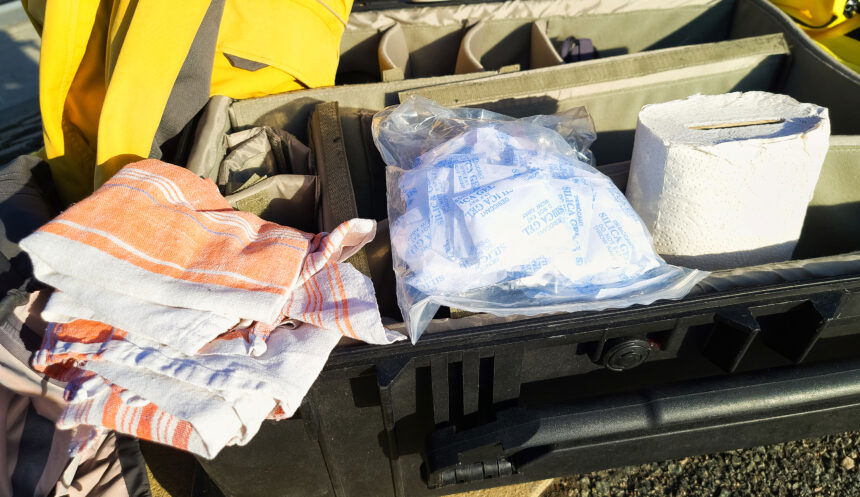
The choice of equipment also depends on the conditions. Space on photo boats is very limited, so I always try to keep gear simple and well protected. Cameras and lenses are stored in waterproof cases or bags that still allow quick access, and I use weather covers and towels to keep spray off the glass. A waterproof pouch with a clear front makes it possible to shoot close to the water without damaging the equipment. Safety gear, such as a life jacket, sun protection, and appropriate clothing, is equally important.
But beyond equipment, it is crucial to understand sailing itself. Knowing the rules, maneuvers, and how boats will react to wind and waves allows you to anticipate the decisive moments. You cannot simply chase after them, since an IMOCA at 35 knots leaves even a fast motorboat behind. That is why positioning in advance, based on knowledge of the sport, is the key to capturing strong images at sea.
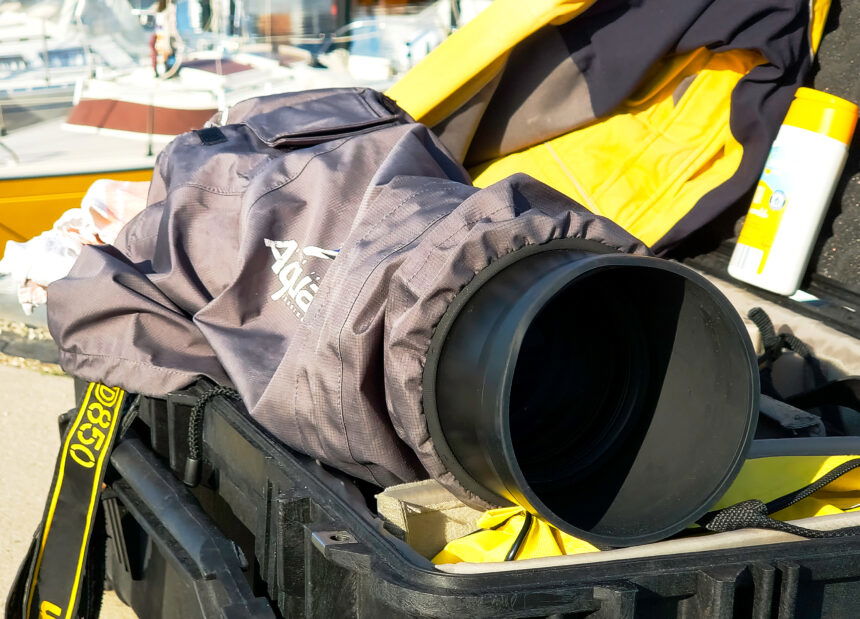
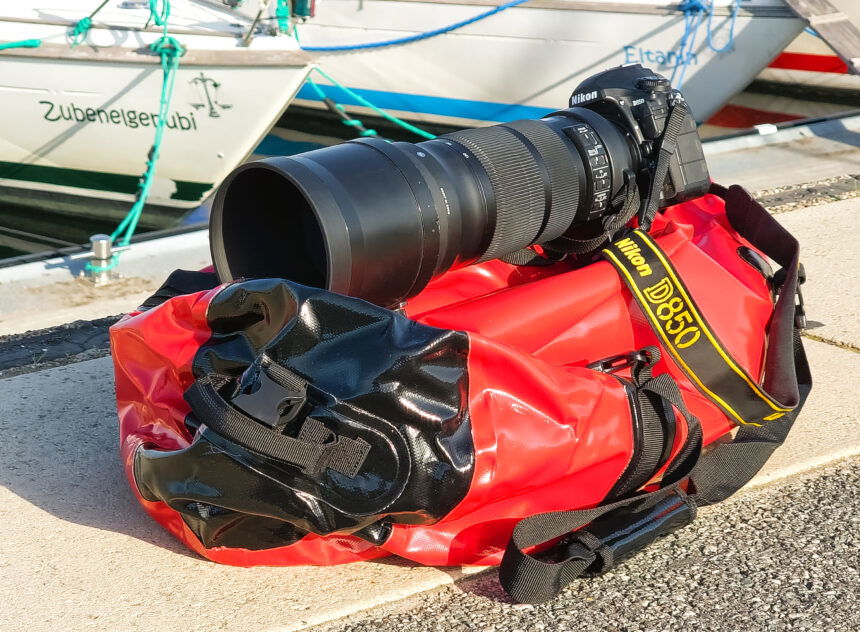
“The choice of equipment also depends on the conditions. Space on photo boats is very limited, so I always try to keep gear simple and well protected. Cameras and lenses are stored in waterproof cases or bags that still allow quick access, and I use weather covers and towels to keep spray off the glass.” – Martin Vahlbruch.
Do you have a favourite shot or moment from your time photographing sailing or during the Ocean Race Europe that still gives you a sense of excitement or pride?
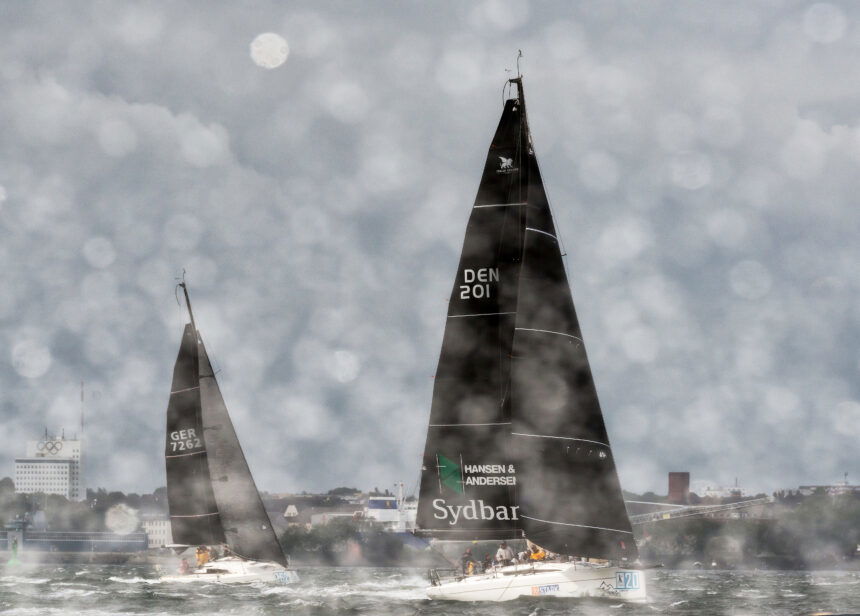
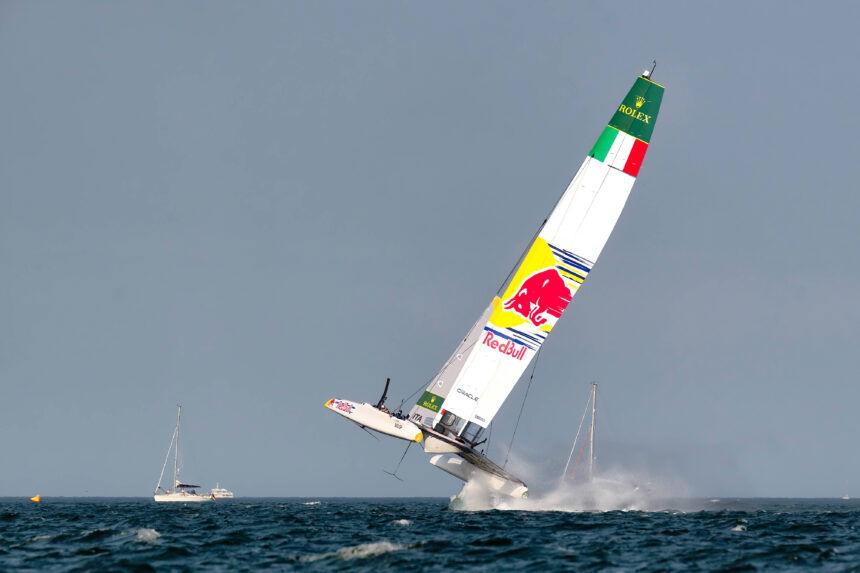
From my series at the Ocean Race in Kiel, the image that stood out the most was the final one I managed to capture before the view was blocked by the many spectator boats. It shows strong dynamics, even though the light had become flat with clouds moving in. What made it special afterward was the fact that, only seconds later, the two boats seen close together in the frame collided and went on to make headlines.
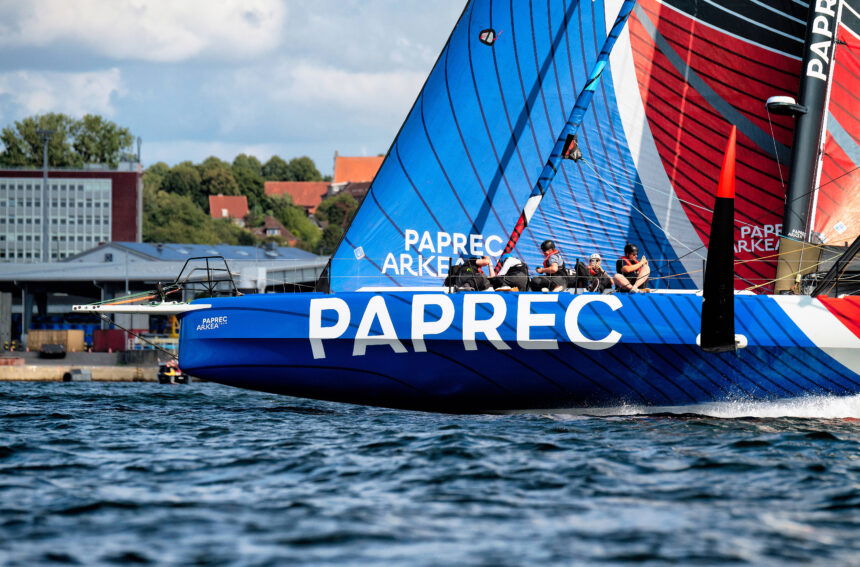
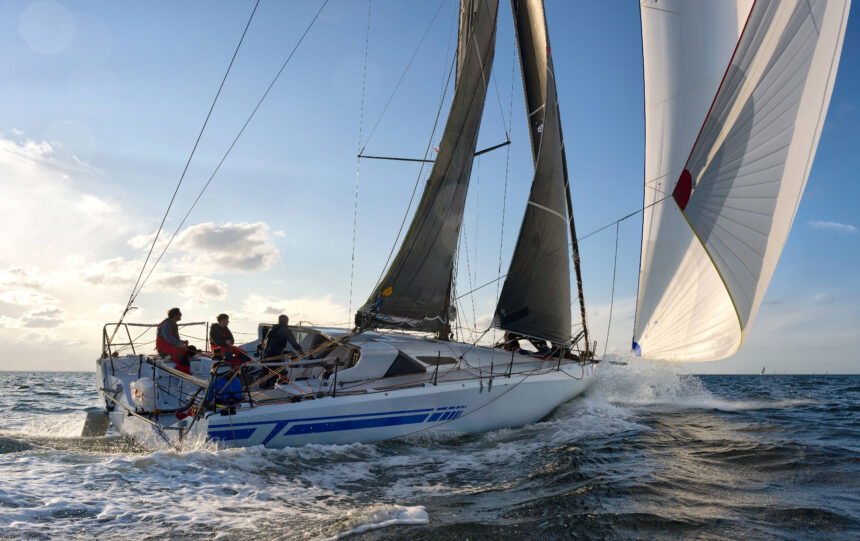
My personal favorite, though, is a photo of the IMOCA “Paprec Arkea” taken during the second speed run on the inner fjord. The beautiful light and the boat’s striking colors gave the picture a vivid quality. The composition, the long focal length, the low hull cutting through the water, the spray starting only far behind, and the crouched crew all combine to express the aggressive dynamics of these boats.
About Martin Vahlbruch
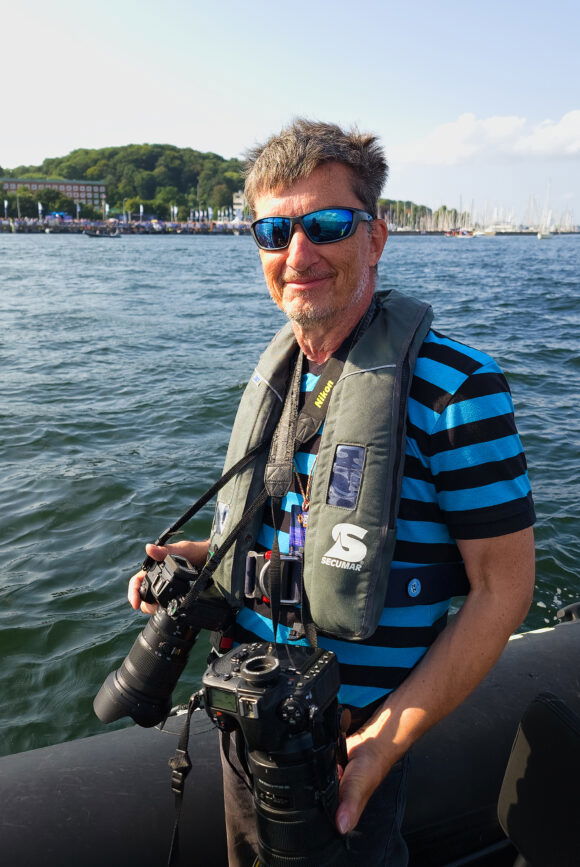
Martin Vahlbruch is an IMAGO photographer from Germany whose work centers on sailing photography and the Baltic maritime environment.
Born and based in Kiel, he grew up close to the beach and was deeply inspired by this setting. As he says, one of his earliest memories is watching the sailing competitions of the 1972 Olympic Games in Kiel-Schilksee.
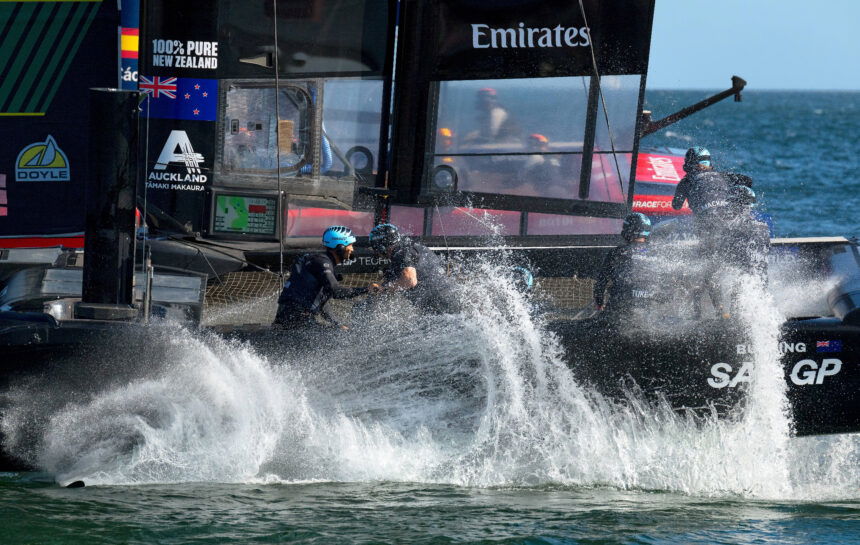
Since 2010, he has gained extensive experience photographing Kiel Week, classic regattas, and international events, including the Ocean Race Europe and Sail Grand Prix. His assignments and personal projects focus on the intersection of sport, sea, and city. When not on the water, he works on city photo books and long-form visual essays.
You can see his photos with IMAGO here.
Cover: IMAGO / Martin Vahlbruch
Read more in “Behind the Lens” on The Game Magazine: