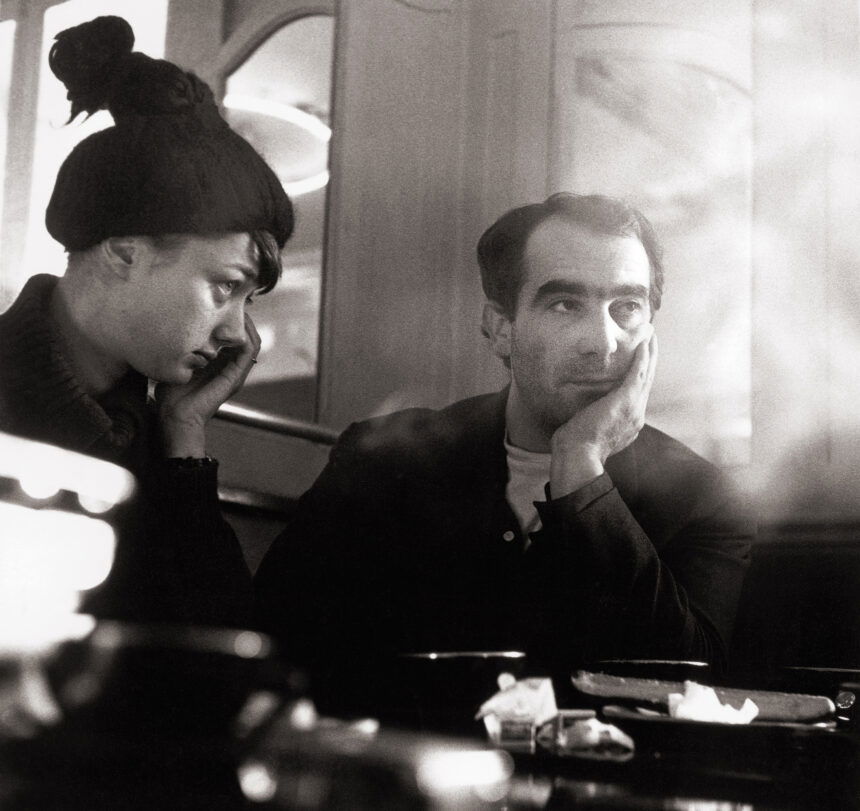
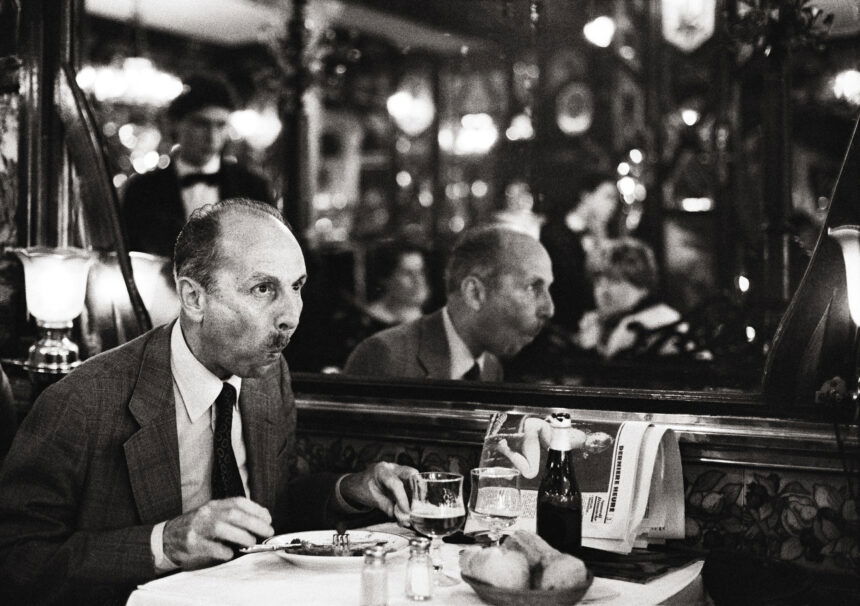
She photographed Warhol, Dalí, and Beckett and captured the pulse of an era. Then, she disappeared from the scene, only to re-emerge with a new, painterly vision. In an exclusive interview with The Game Magazine, artist and photographer Vera Mercer reveals the stories behind her iconic portraits and the reinvention that defines her celebrated still life work.
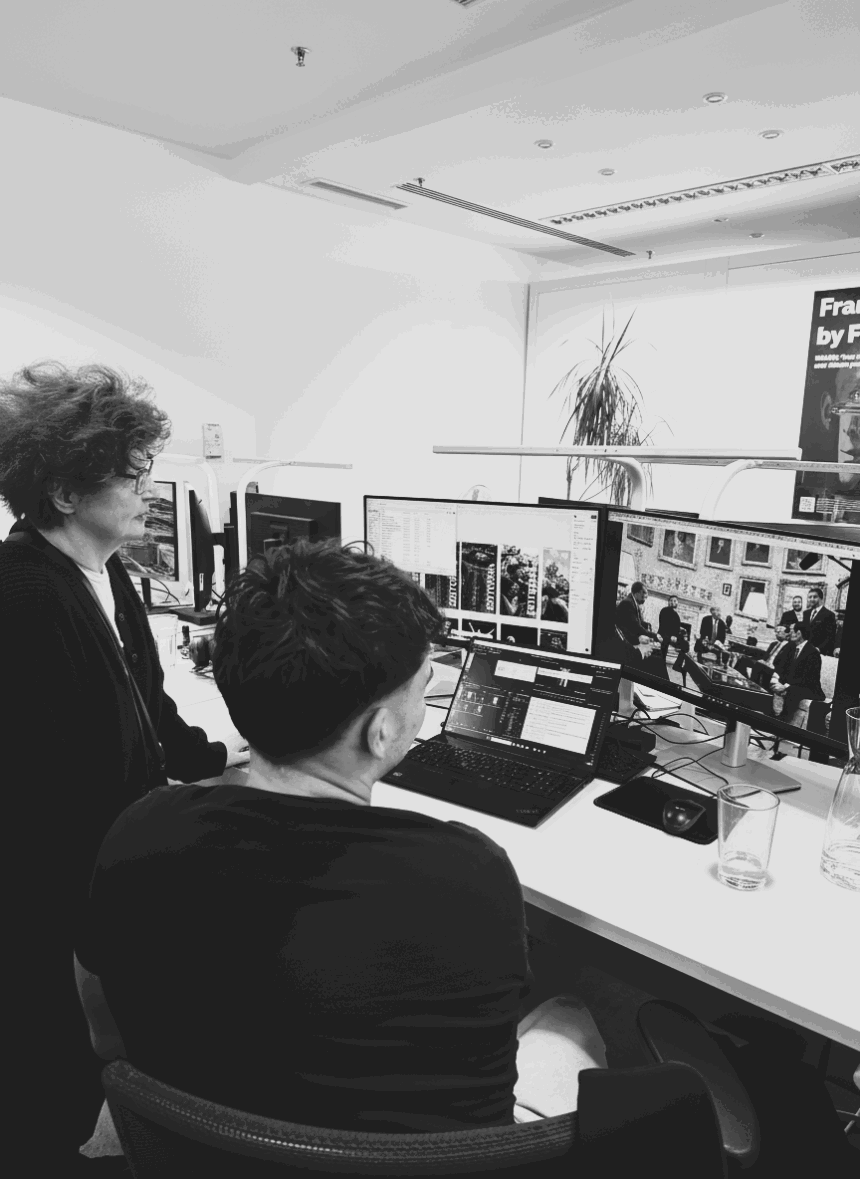
Vera Mercer moves through the IMAGO room, having walked the corridors moments before. At almost ninety, she moves with a calm steadiness, her gaze fixed on the latest images lighting up the screen. “I was very quick back then,” she jokes, “though not so much anymore.” She began as a dancer and then moved the stage to the darkrooms.
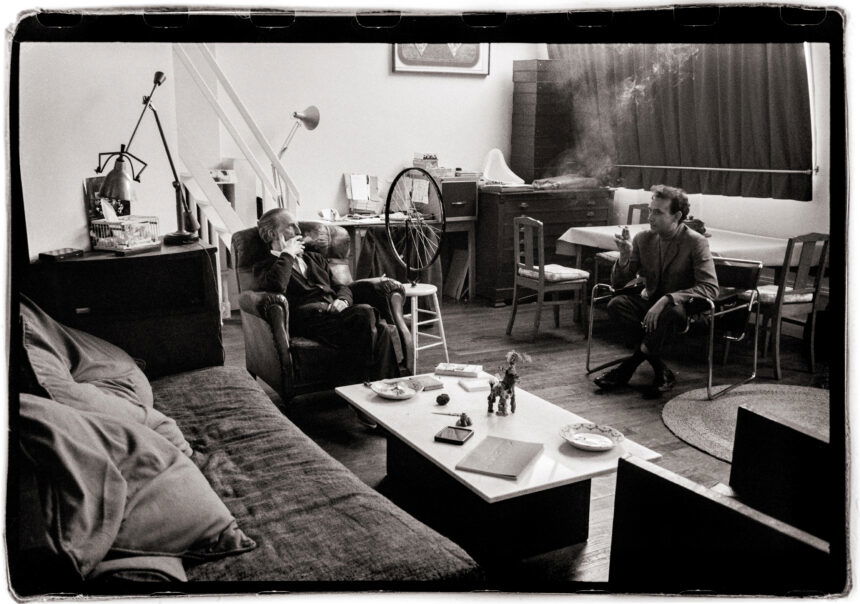
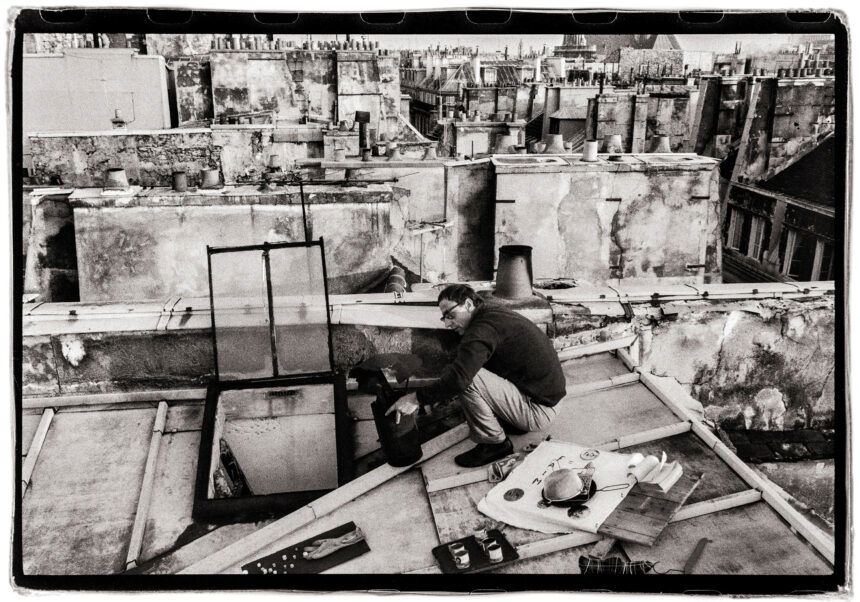
In 1960 her husband, the artist Daniel Spoerri, handed her a camera, and a new rhythm began. “That was the real beginning of my journey into photography,” she smiles. She learned by doing in Paris, surrounded by artists and journalists who needed photographers for their stories. “I was entirely self-taught,” she notes, picking up the craft on the road with mentors like Shunk-Kender. Her path carried her to the United States, where language posed its challenges, but the language of photography carried her through. She photographed figures like Beckett, Dali, and Warhol, and those moments became part of the era’s memory.
“Tell me about your life,” she asks, turning the questions back with curiosity. The conversation feels like a two-sided interview and shows how deeply she is interested in people and how that shapes her work. Her habit of stepping into restaurants to meet strangers, to observe how people move, shows up again and again in the work she’s made. Vera has worn many hats and, in a sense, remains a full artist: dancer, photographer, observer.
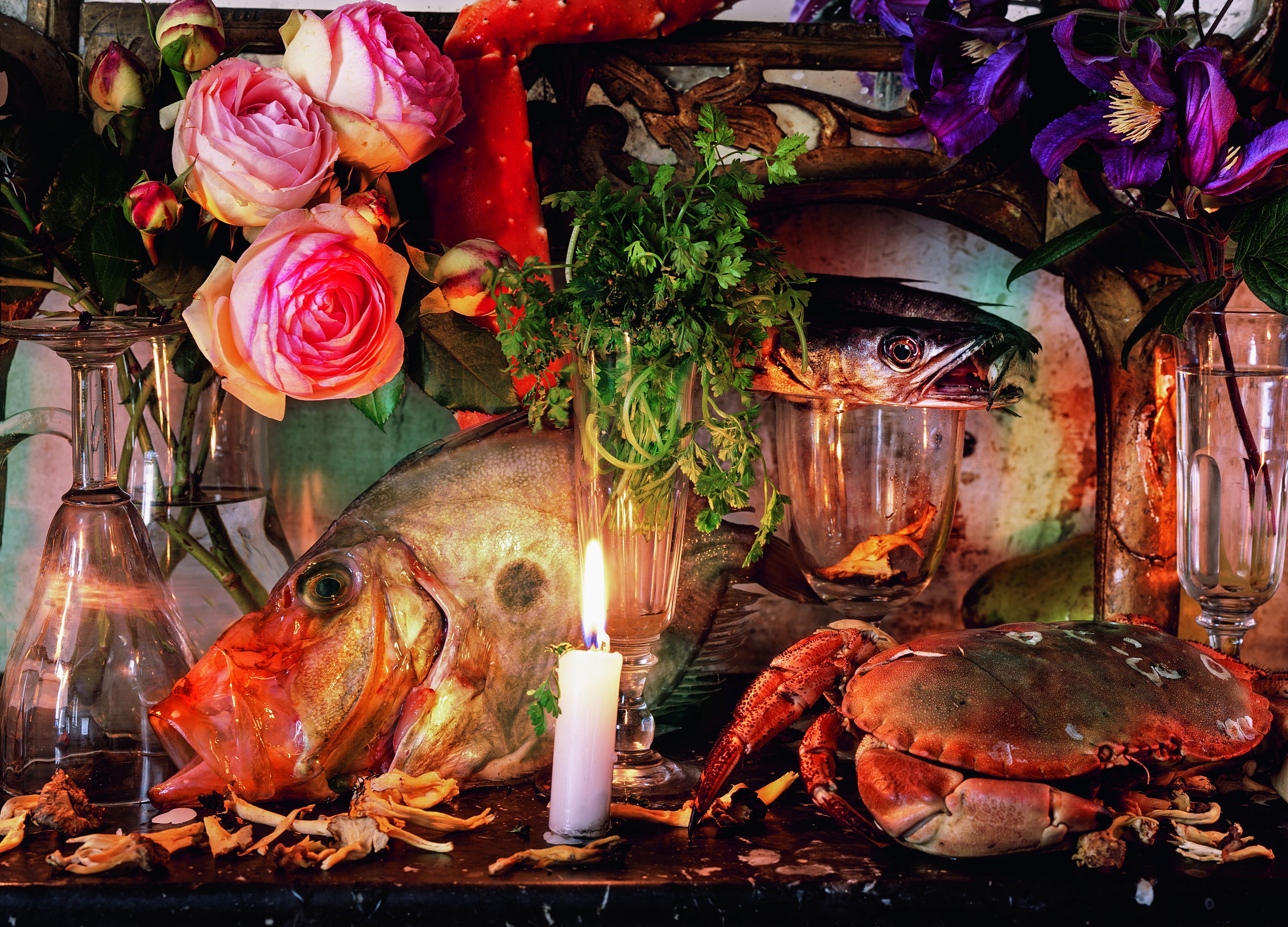
The shift to still lifes came later, after life outside the studio, marriage, new ventures, and a turn toward color. “I began to build my own color laboratory and started making my first color photos.” When she returned to photography, she fused modern and traditional approaches and pursued a painterly mood in food and flowers, insisting that atmosphere governs technique: “The atmosphere of your printing is very important.”
Now Berlin’s Life in Focus presents Vera with the same clarity she’s always sought. “I love what I do, then and now.” Her aim is simple but powerful: keep things human and strong. “Now I want to become simpler, but with that simplicity, you also need to find strength, which is difficult.” The show marks a pivotal moment in a life spent moving between documentary immediacy and contemplative stillness, a bridge to what comes next: “An exhibition like this gives you hope to make more interesting things. Now I want to think about what’s next.”
I never felt there was a difference between me and a man. I love what I do, then and now. — Vera Mercer.
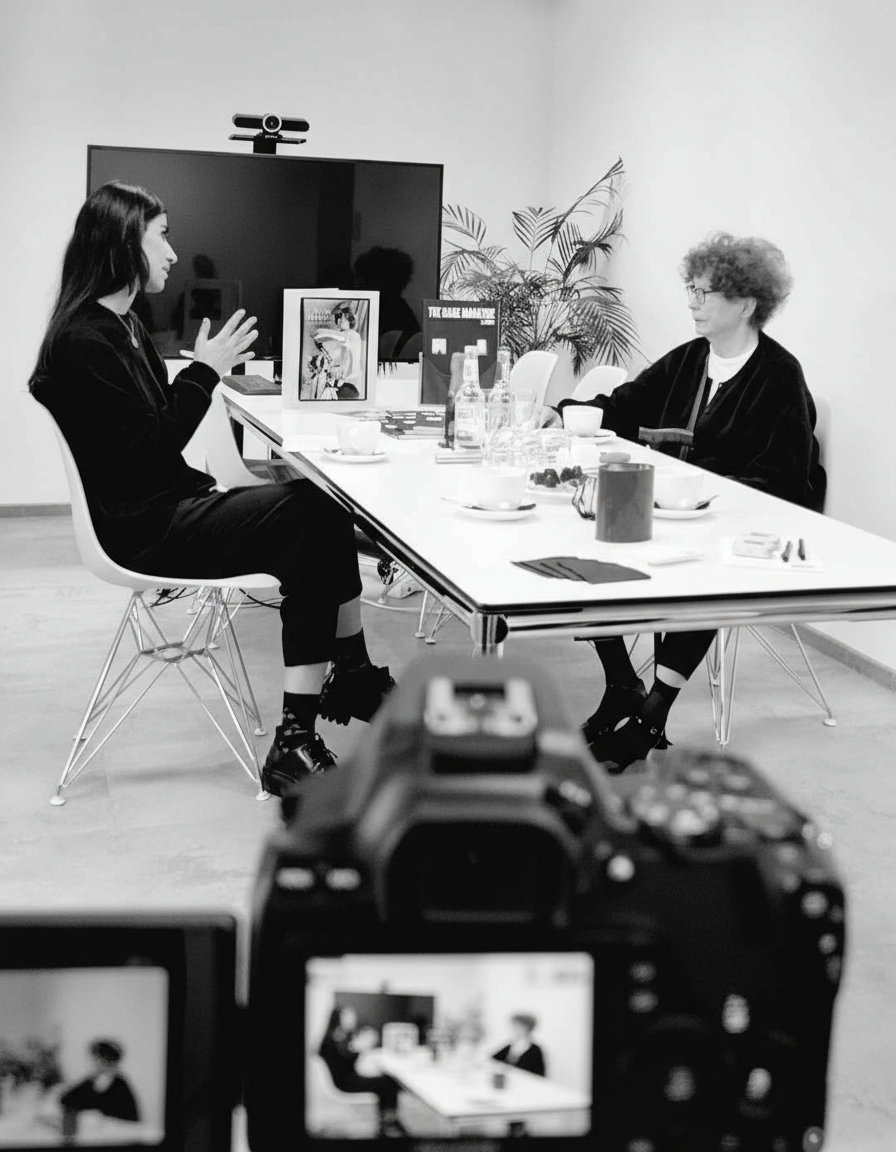
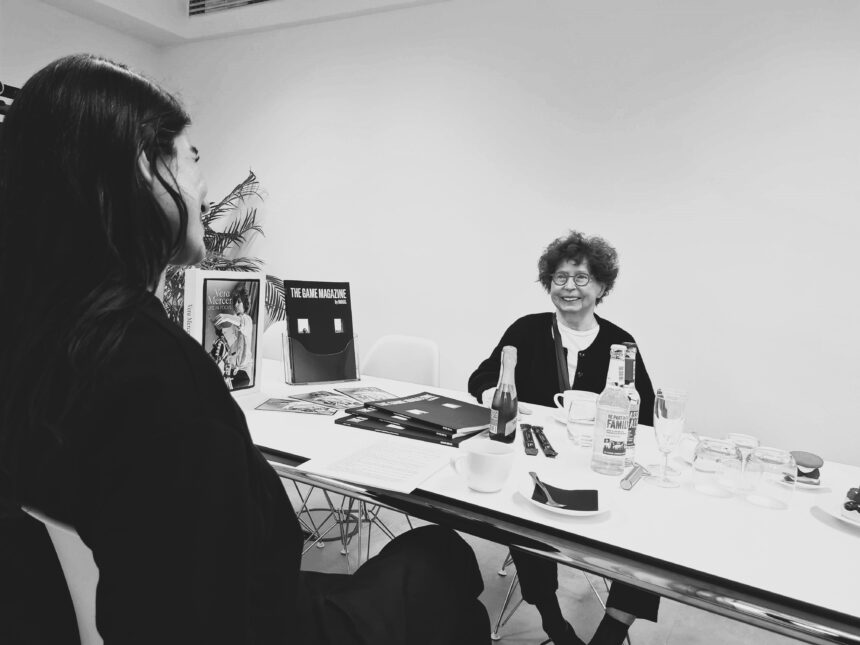
Photo: Nicole Woischwill | Artist and photographer Vera Mercer in conversation with journalist Fatemeh Roshan from The Game Magazine for her interview.
From Dancer to Photographer: The Early Years
Your journey began not with a camera, but with dance. You moved to the vibrant art scene of Paris in the 50s. Can you share the story of how did you become a photographer?
Yes, I began as a dancer. I was very quick back then, though not so much anymore (laughs). When I moved to Paris, I had the wonderful opportunity to meet many well-known artists who needed photographs. At that time, my husband, Daniel Spoerri, gave me my first camera, and that was the real beginning of my journey into photography. I believe that was in 1960.
From that point on, I was entirely self-taught. I worked as an assistant and learned everything on my own, which was a very different way of starting as a photographer compared to today. I also had the good fortune to meet the photographers Shunk-Kender, who were very famous at the time, and I learned a great deal from Shunk. I used to develop all my photos at night in a tiny room.
What was it like to be a young photographer starting out in that era? Given that many women faced significant barriers at the time.
I never felt there was a difference between me and a man. I love what I do, then and now. No one found it strange that a woman was a photographer. In the art scene at that time, there wasn’t much of a challenge in that regard.
@ Vera Mercer | Robert Filliou, Paris 1961.
As you mentioned, you began in photojournalism, which is quite different from your current studio work. What was it like to juggle interviewing and shooting at the same time?
I’ve always enjoyed spending time in cafes and bars, and as it happened, I met a journalist from Denmark in a cafe. He needed a photographer, and I began working with him. I also did work for the magazine Theater heute, which I enjoyed immensely. We would visit different artists, and I would photograph them. After a while, I traveled to the USA by myself, which was a very different experience because I had to conduct interviews in another language and take photographs at the same time. But it went well, and I managed to do it.
When was it that you went to the USA?
I was traveling back and forth for a while. It was around 1961 or 1962. I went to photograph there without an official assignment; I just went because I wanted to.
Photographing the Icons: Warhol, Dalí, and Beckett
Your work as a photojournalist put you in the same room with some of the most defining cultural figures of the era, including Samuel Beckett, Andy Warhol, and Salvador Dalí. Each had such a powerful and distinct presence. Could you share what it was like to step into their worlds and capture them on film?
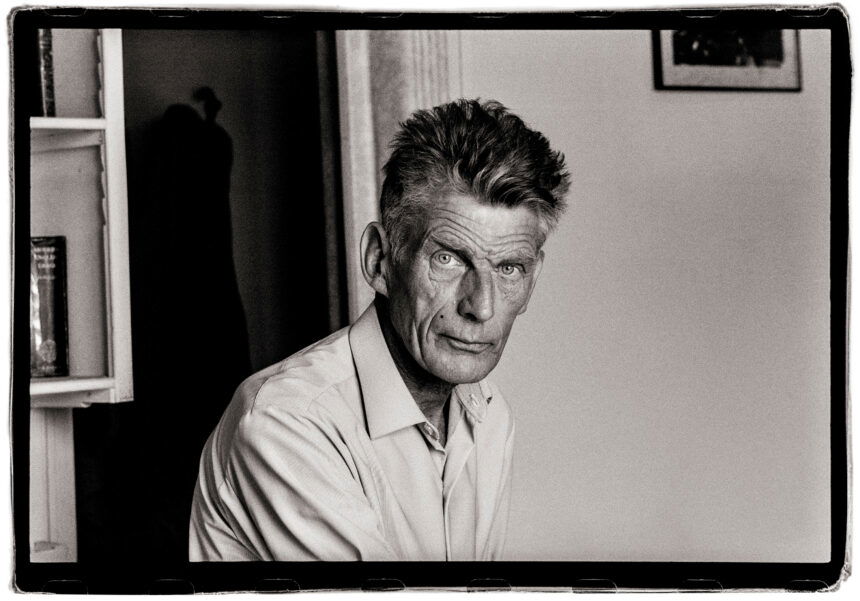
Photographing them was a wonderful experience. I photographed Samuel Beckett in Paris. I had read practically everything he had written, and I just went up to his room. It was a very sparse room, with only a few books, but he had a very interesting face. I was very young, maybe 23, and that’s quite young for doing something like that. In the middle of the interview, my lens malfunctioned and the photos became unsharp. I got very nervous, but later on, I found that placing an unsharp photo next to a sharp one can be very effective. There are always difficult moments in this line of work, but he was very gentle and tried to help me.
My lens malfunctioned and the photos became unsharp… but he [Samuel Beckett] was very gentle and tried to help me. — Vera Mercer.
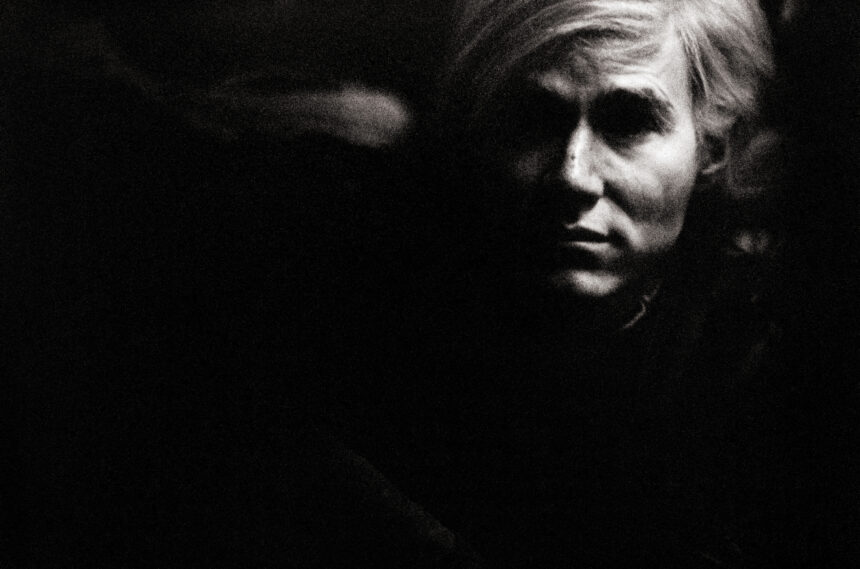
With Andy Warhol, I went to his studio in New York. It was a new space with many small rooms separated by clothes instead of walls. The clothes were draped in a way that you could see and not see at the same time. While I was interviewing, Warhol had arranged for a couple to be making love in the adjacent room. The fabric divider didn’t reach the floor, so their legs were visible from where we sat. He was interested in my reaction, but I just continued with my interview. It was with one of his film stars. He was funny and made things a little more interesting by building these scenarios.
While I was interviewing, Andy Warhol had arranged for a couple to be making love in the adjacent room… He was interested in my reaction, but I just continued with my interview… He was funny and made things a little more interesting by building these scenarios. — Vera Mercer.
I photographed Salvador Dalí at a very fancy hotel. There were many other journalists there as well. Dalí doesn’t like to be touched. I never use a flash, so I was trying to capture the beautiful ambient light and flicked a switch to brighten it. Dalí had seen me and wanted to stop me. As I was about to take a picture, I felt a crutch on my head. But I was determined to get a photo, so I waited for someone else’s flash to go off, and I clicked at the same time. It turned out to be a very nice photo.
The Pivot to Still Life and a New Vision
There was a significant shift in your work, from the kinetic energy of reportage to the quiet, almost classical composure of your still lifes. What inspired this pivot towards subjects like food and flowers, and how did your time away from photography contribute to that new vision?
After my marriage ended, my photography career progressed quite quickly. I worked with Theater heute and various Scandinavian magazines. However, many of the papers and magazines I worked for eventually closed. So, I naturally started to move towards galleries. I’ve always been very interested in the technical side of photography, so I began to build my own color laboratory and started making my first color photos.
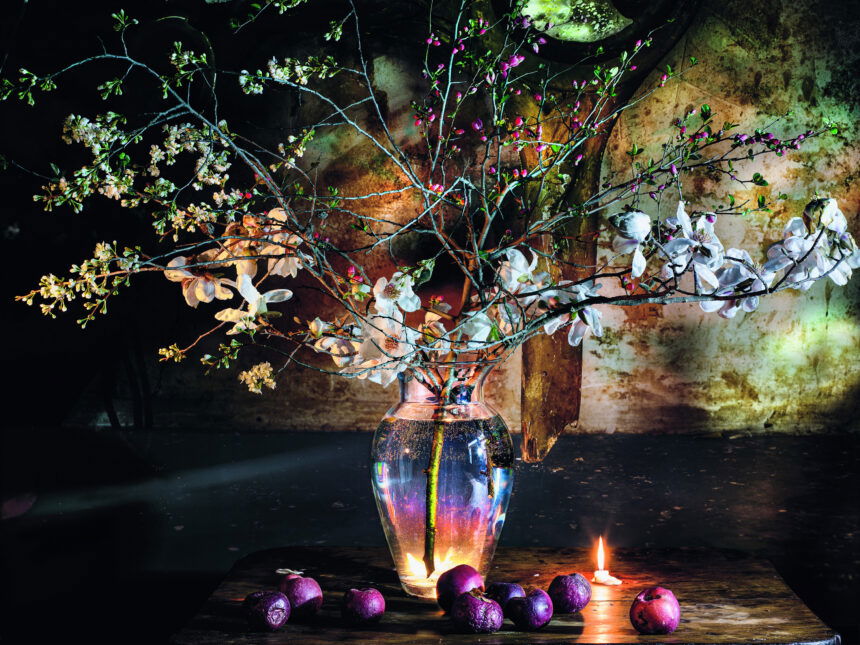
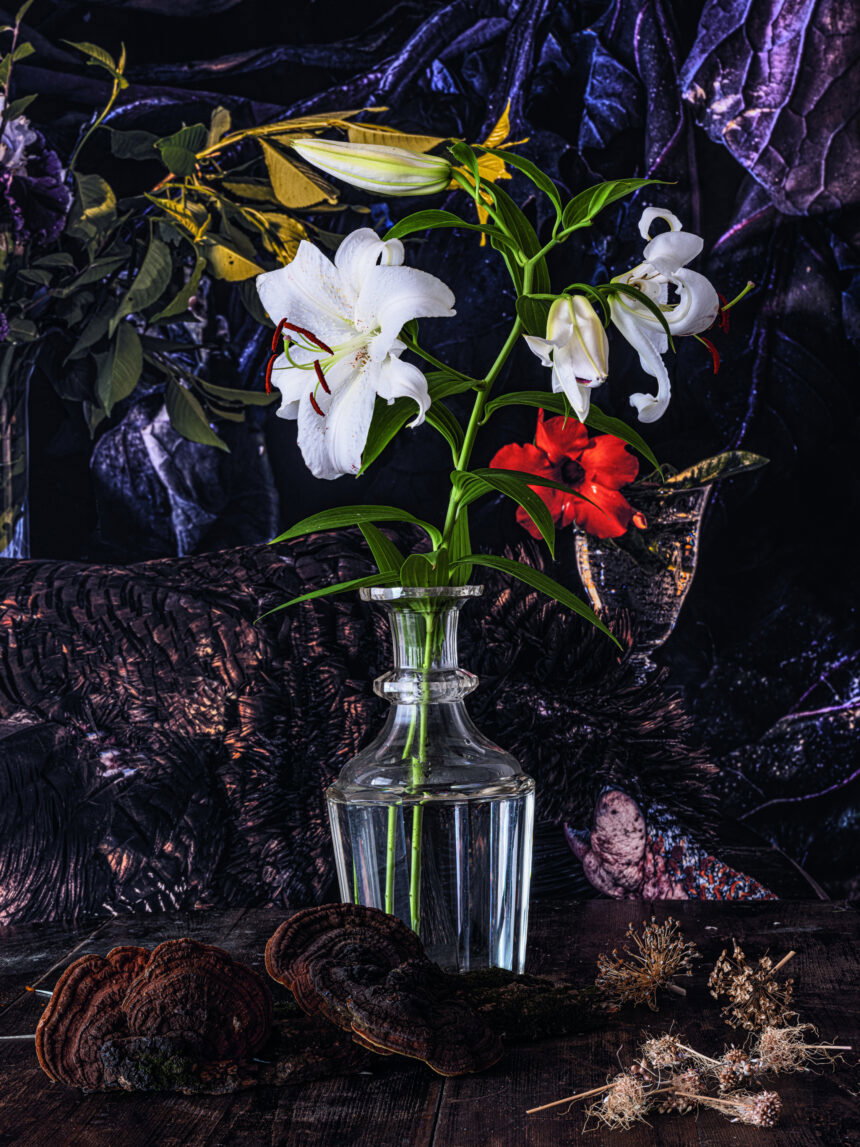
Then, for two years, I stopped doing photography. My father-in-law had bought a lot of old buildings in a historic market area in America, and we needed to clean them up. After those two years, I returned to photography in a completely different way. I was always surrounded by food because of the restaurant we opened, and I became interested in the movement of eating. My earlier work was also influenced by painting, and my still life photos of food and flowers have a painterly quality. I try to create an atmosphere that brings together modern and old-fashioned elements. I also wanted to be a gardener at a very early age, so that might have influenced my choice of subject matter.
@ Vera Mercer | Magnolia, 2015.@ Vera Mercer | Lily, 2022
On Technique, Film, and Finding Strength in Simplicity
The atmosphere of your printing is very important. I like my black and white prints to be very black. I feel it gives them strength. — Vera Mercer.
You’ve moved from platinum prints in the past to digital work today. How do those paths inform your current approach, and what do you carry from one era into the other?
If I had a lot of time, I would go back to film. It is different. Platinum prints are beautiful, but they take a lot of time. You can’t use them for every subject; the subject needs to have an old-fashioned quality. With film, it’s so much harder, but I’ve always printed my own photos, so I can choose the atmosphere. The atmosphere of your printing is very important. I like my black and white prints to be very black. I feel it gives them strength. Other people prefer a softer, more gentle look, but that’s not my style.
What are you working on now?
I want to change how I present my work. I’ve always had a lot of things in my photos, even when I was in school and trying to paint. Now, I want to become simpler, but with that simplicity, you also need to find strength, which is difficult. So, I am slowly moving from having many things in my photos to being more minimalist, while still maintaining a strong presence. I’m also really beginning to like black and white again.
Now, I want to become simpler, but with that simplicity, you also need to find strength, which is difficult. — Vera Mercer.
How has the world of photography changed for younger photographers today, in your view?
It’s so much more technical now. I was fortunate because I was always interested in the technical side of things. I could have stayed with the old methods, but I always wanted to learn new things. I transitioned from film photography to digital without any problem. But now, with so many photographers and no papers to work for, it must be very difficult for young photographers to get noticed. They have to go to galleries, and that’s the only way.
Finally, what does the exhibition Life in Focus mean to you, and what comes next?
An exhibition like this gives you hope to make more interesting things. It gives you hope for something new and more interesting. I would love to do new things, but it takes time. This exhibition took a lot of my time, so now I want to think about what’s next.
Vera Mercer was born in Berlin in 1936. Her father was a theater set designer, an early influence that would shape her creative direction. In the 1950s, Mercer moved to Paris, where she was associated with the Nouveaux Réalistes artistic movement. Her photography career began during this period when she was asked to document the sculptures of artists such as Jean Tinguely.
This initial work led to a career in photo reportage. She photographed many prominent cultural figures, including Samuel Beckett, Andy Warhol, and Marcel Duchamp. After this period, Mercer relocated to Omaha, Nebraska, with her second husband. There, they opened a series of restaurants, and she began creating large-scale photo murals to be displayed within them, merging her culinary and artistic endeavors.
In 2005, Mercer began working with digital color still lifes, a practice she continues to explore. For these compositions, she sources subjects from local markets and uses objects she has collected over time. Her work has been exhibited in galleries and museums across Europe and the Americas. Currently, her retrospective exhibition, “Life in Focus,” is on display at the Zitadelle in Berlin, showcasing a comprehensive collection of her work.
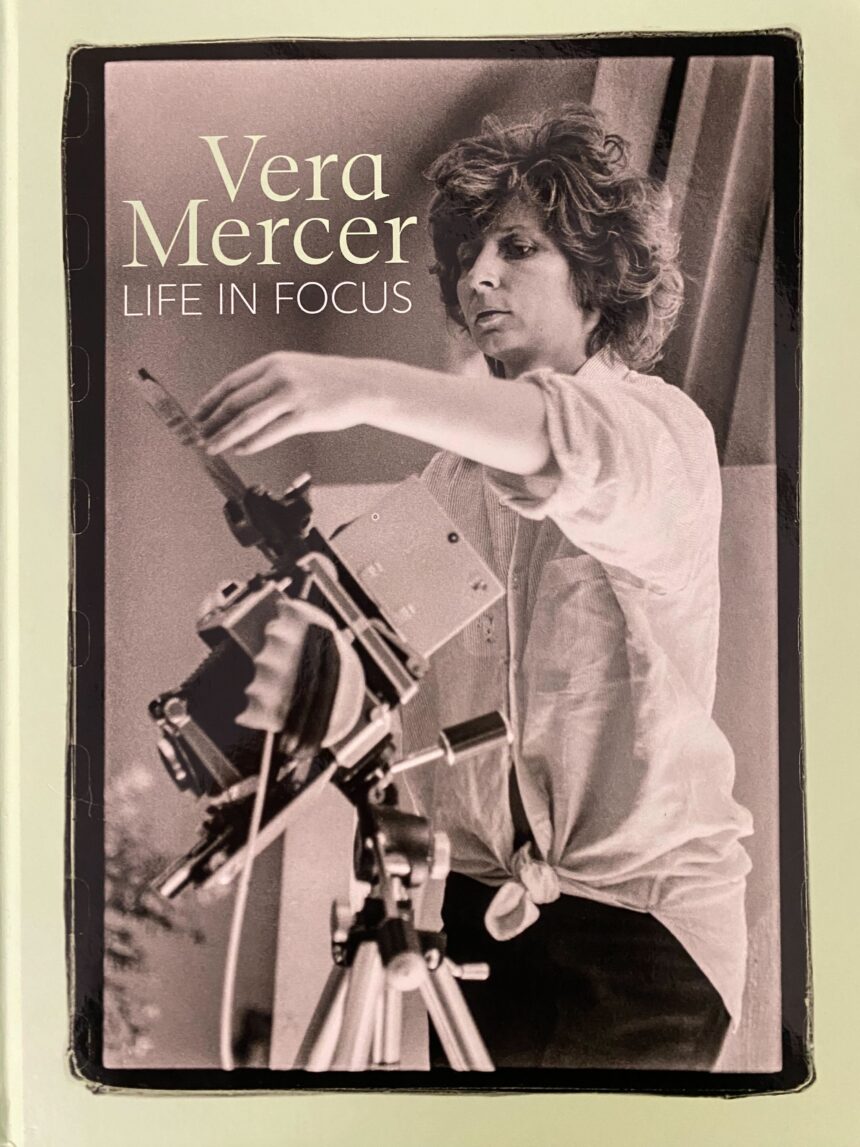
Photo: The Game Magazine | The book “Vera Mercer: Life in Focus.”
Exhibition note: Vera Mercer’s Life in Focus is on view at the Center for Contemporary Art (ZAK) in Berlin’s Spandau Citadel through January 11, 2026. A companion publication accompanies the show, curated by Jens Pepper. For details, see the exhibition page at zitadelle-berlin.de.
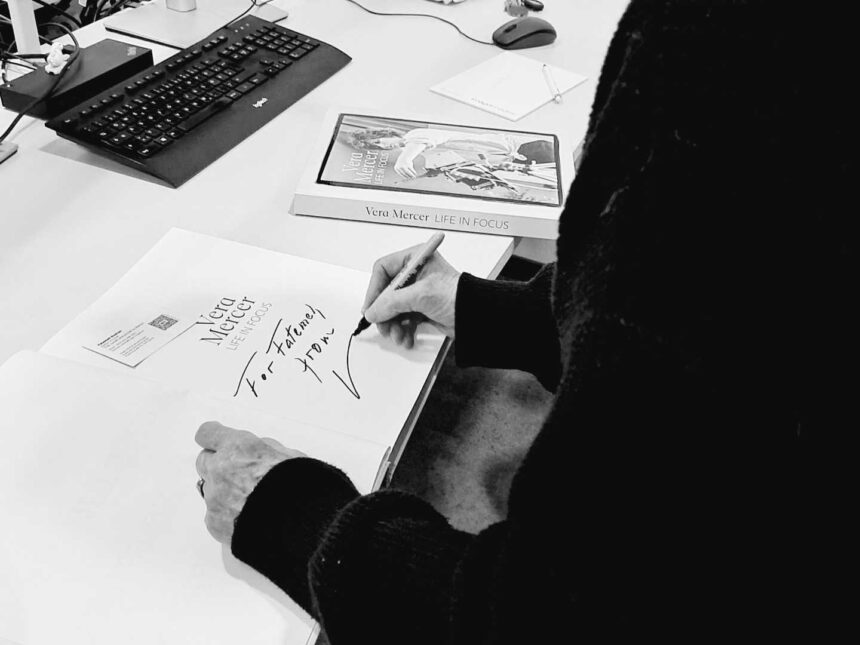
Photo: Nicole Woischwill | Artist and photographer Vera Mercer signing her book “Life in Focus.”Photo: Nicole Woischwill | Artist and photographer Vera Mercer in conversation during her interview.Photo: Nicole Woischwill | A life spent with art and images: Vera Mercer observes the work at the office of the IMAGO photo agency.