

When Germany won the tug-of-love with England for the Bayern Munich attacker’s international affections, they secured the services of arguably Europe’s most promising young forward. The Game Magazine columnist Andy Murray investigates how Jamal Musiala got here.
Jamal Musiala: The Making of Germany’s New Football Icon
At just 22, Jamal Musiala is already one of the faces of Germany’s football future. Born in Germany, raised in England and nurtured at Chelsea’s celebrated academy, Musiala moved to Bayern Munich, a decision that intensified football’s historic rivalry between Germany and England.
As Musiala continues to dominate headlines and inspire many, The Game Magazine explores his remarkable journey from poetry prizes in London classrooms to record-breaking performances in Bundesliga stadiums. Discover how a shy, gifted boy became one of Europe’s most thrilling young stars by Andy Murray.
Poetry Prizes, a Football Twin and Brexit: The Making of Jamal Musiala
By Andy Murray
Brexit is responsible for many things in the UK generally, and England specifically. A rising mistrust of immigration, despite its proven economic benefits? Check. Byzantine bureaucratic red tape, particularly on cross-border food imports and exports? Oh, yes. Airport queues? Never-ending. But, still, what about those lovely blue passports, eh?
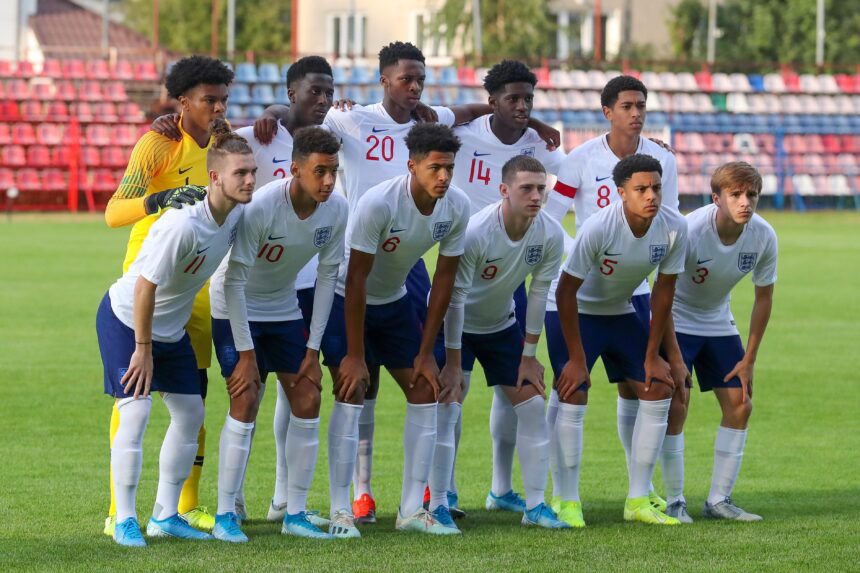
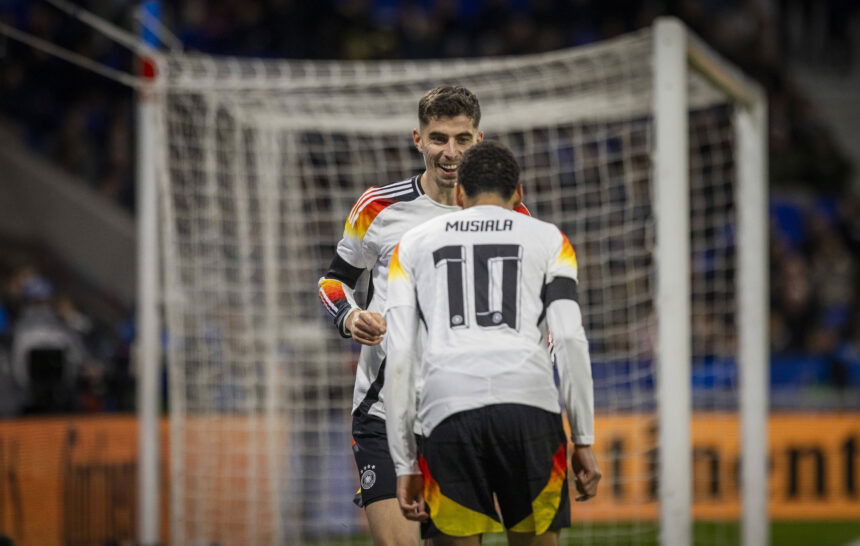
Not even football is immune. Were it not for England’s spectacular attempt at self-immolation, Jamal Musiala would probably be joining Jude Bellingham, Bukayo Saka and Cole Palmer in a luxuriously gifted Three Lions attack, all of whom are 23 and under. As it is, the 21-year-old playmaker, who shone in the same England Under-15s team as Bellingham, is now their biggest rivals’ creator-in-chief and poster boy. From Chelsea and England to Bayern Munich and Germany – thanks a bunch, Nigel, Boris & Co.
“He can be the Messi of the future, he is excellent,” Germany’s most-capped player Lothar Matthaus, has said. “I love his style of football, and I love his personality. He’s [young], he is doing the things that will make him a top footballer. He has great passing, he is clever with his thinking, and he loves football.”
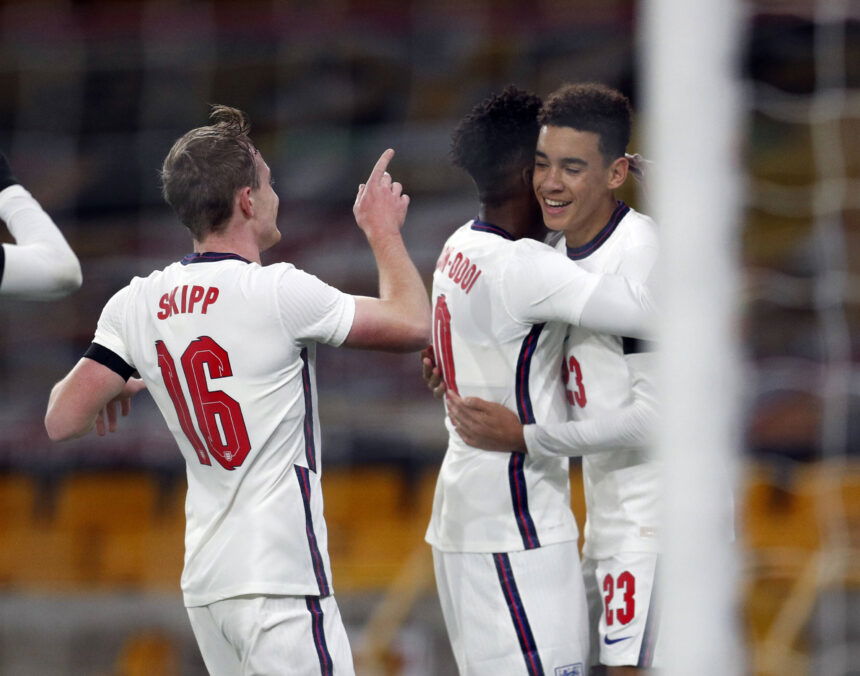
Records have tumbled for Musiala, the youngest to ever do it in numerous categories for club and country, but the forward’s bare statistics over the past three seasons in particular provide proof were it needed that this is one of Europe’s most productive outlets. In that period, he has 78 goal involvements for Bayern in all competitions and scored a personal best 18 in 2024/25, despite missing the final six weeks of the season through injury. A fifth Bundesliga title of a nascent career was just reward, along with a third successive place in the German top flight’s team of the season.
Two-footed, Musiala is a press-resistant street footballer who thrives off instinct and bravery in the tightest of areas to take on serried ranks in front of him. Put him under pressure and, like Houdini covered in goose fat, a swivel of his sinuous hips is enough to escape even the tightest attention. Fond of the croqueta – the great Andres Iniesta’s signature move in which the ball is switched at lightning speed from one foot to the other – he is devastatingly effective playing between the lines in inside channels between opposition full-backs and centre-backs.
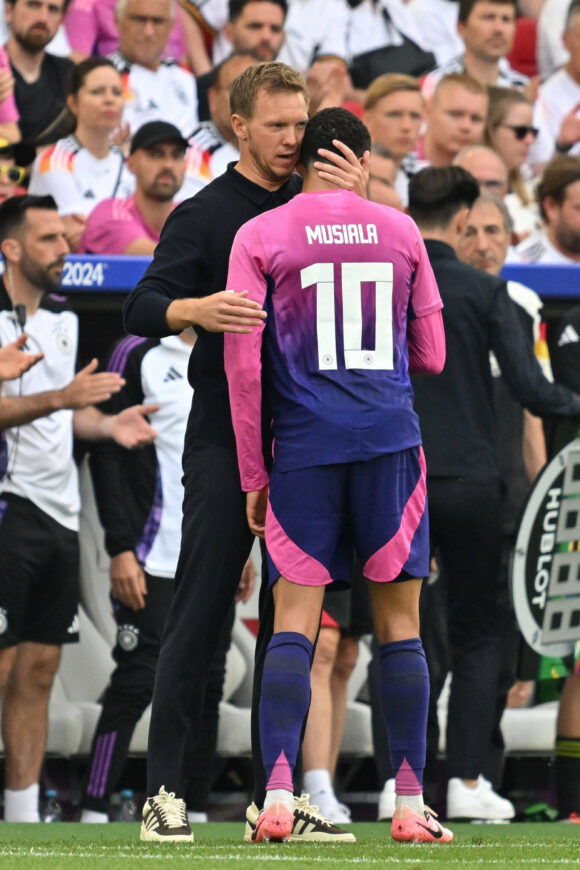
“I always said he should just play like he is on a small pitch anywhere as a kid and playing with his friends,” says current Germany boss Julian Nagelsmann. “He is brilliant at just playing football, and he should just enjoy playing football.”
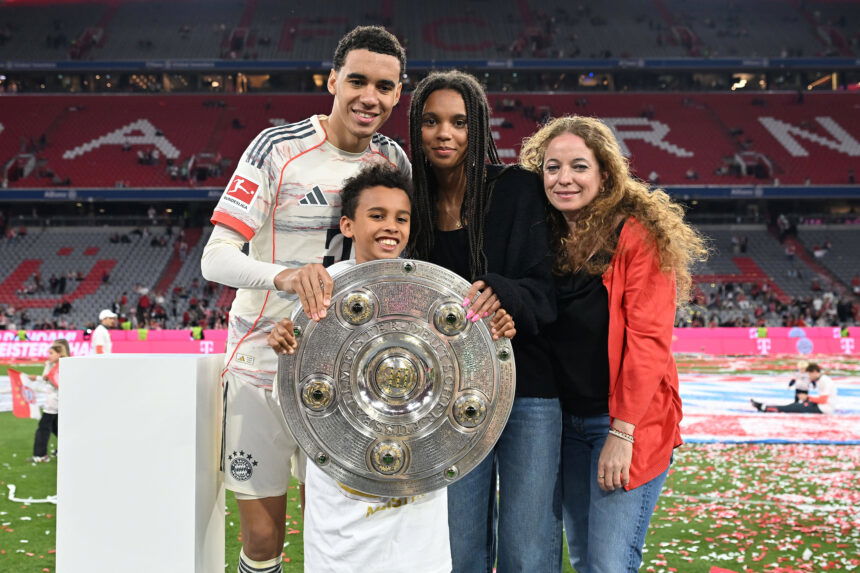
All this from a frame that has always erred on the side of slight. Born in Stuttgart to mother Carolin, a German national with Polish roots, and Nigerian-British father Daniel Richard, Musiala was small of stature but big of talent from an early age. The family soon moved 150 miles north to Fulda – a small city in central Germany – where Carolin was starting an undergraduate degree in social sciences.
It was here that Musiala took his first organised footballing footsteps, with local amateur side TSV Lehnerz G-Juniors. One of his prized possessions remains the Golden Boot his first coach, Micha Hoffmann, gave him after scoring 100-plus in a spectacular 2008/09 season. “I would have been a bad coach if I hadn’t at least given him a small thank you,” Hoffman later laughed.
Musiala was only six but began playing two years above his age group in search of a greater challenge that still didn’t come. His father, a sturdy amateur acrobat known by all as ‘Rich’, was a constant presence running up and down the line, cheering on the tiny kid in an oversized shirt. By the time Carolin was doing a master’s degree at Frankfurt’s Goethe University and was offered a four-month placement at the University of Southampton in late September 2010, the family followed, now accompanied by younger sister Latisha.
They turned up at Southampton’s St Mary’s Stadium after struggling to find Jamal a team. At the Saints Foundation office, set up to provide links to the club and the local community, they were introduced to the Bhatti brothers, Jazz and Rosh, who ran the City Central youth team. There, among the first players Musiala met was someone born on the exact same day as he – Levi Colwill, now at Chelsea and an England international, remains one of Musiala’s best friends in football.
The Bhattis soon alerted the Southampton academy to the star in their midst – Rosh has always maintained he knew that Musiala would make it, even when, as a seven-year-old – but so did other clubs further up the food chain. Chelsea prized him away partly because of their exalted stature but also because Carolin, who had briefly returned to Germany when the four months were up, wanted to return permanently to London and looked for jobs and flats near the UK’s capital while writing her final thesis. She eventually got a job as a marketing executive at an American science company in Farnham, Surrey, near Chelsea’s Cobham training ground.
Her son, chronically shy and speaking very little English when the family had first arrived, came to show as much aptitude in the classroom as he did on a football pitch. Musiala reached the national finals with Corpus Christi Primary School in New Malden and won a poetry competition for a piece about his first day at Chelsea. So determined were they to give their starlet the best care, they arranged for a scholarship to the prestigious Whitgift School, whose pupils included young Blues prodigy Callum Hudson-Odoi.
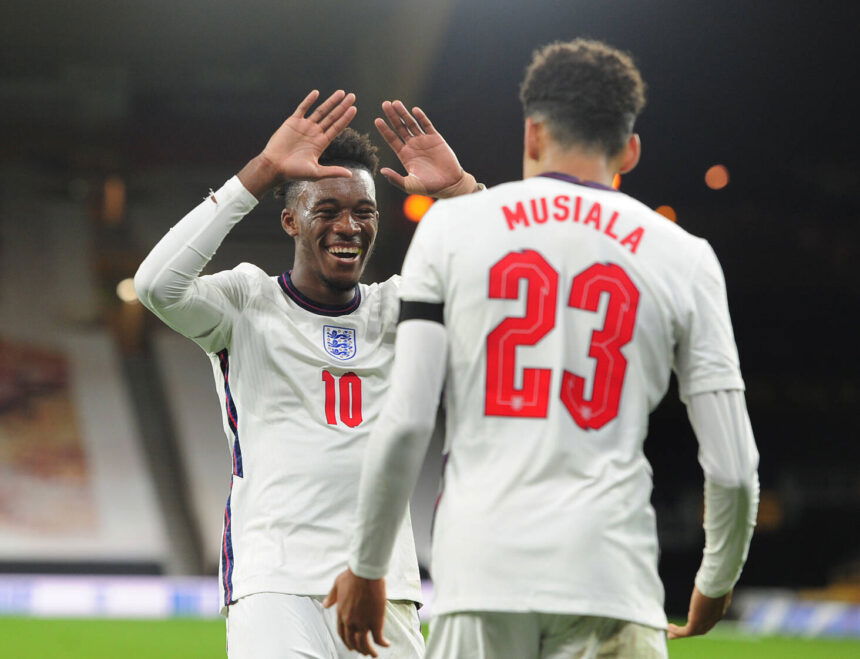
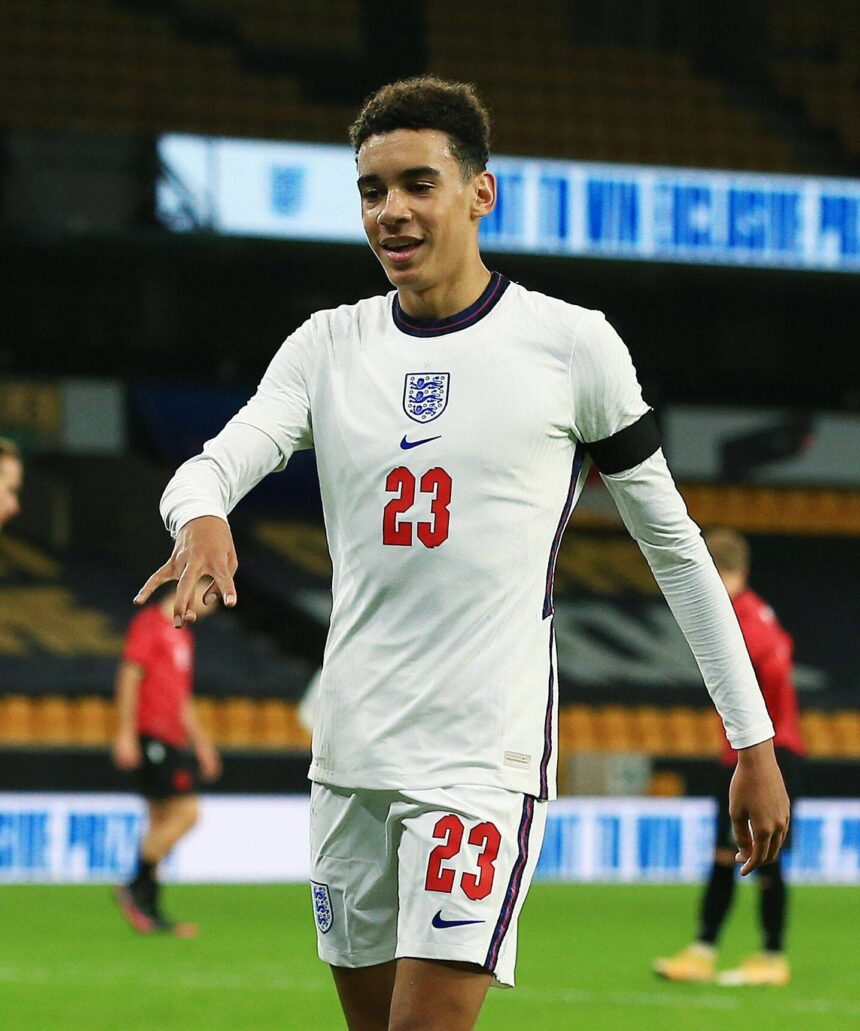
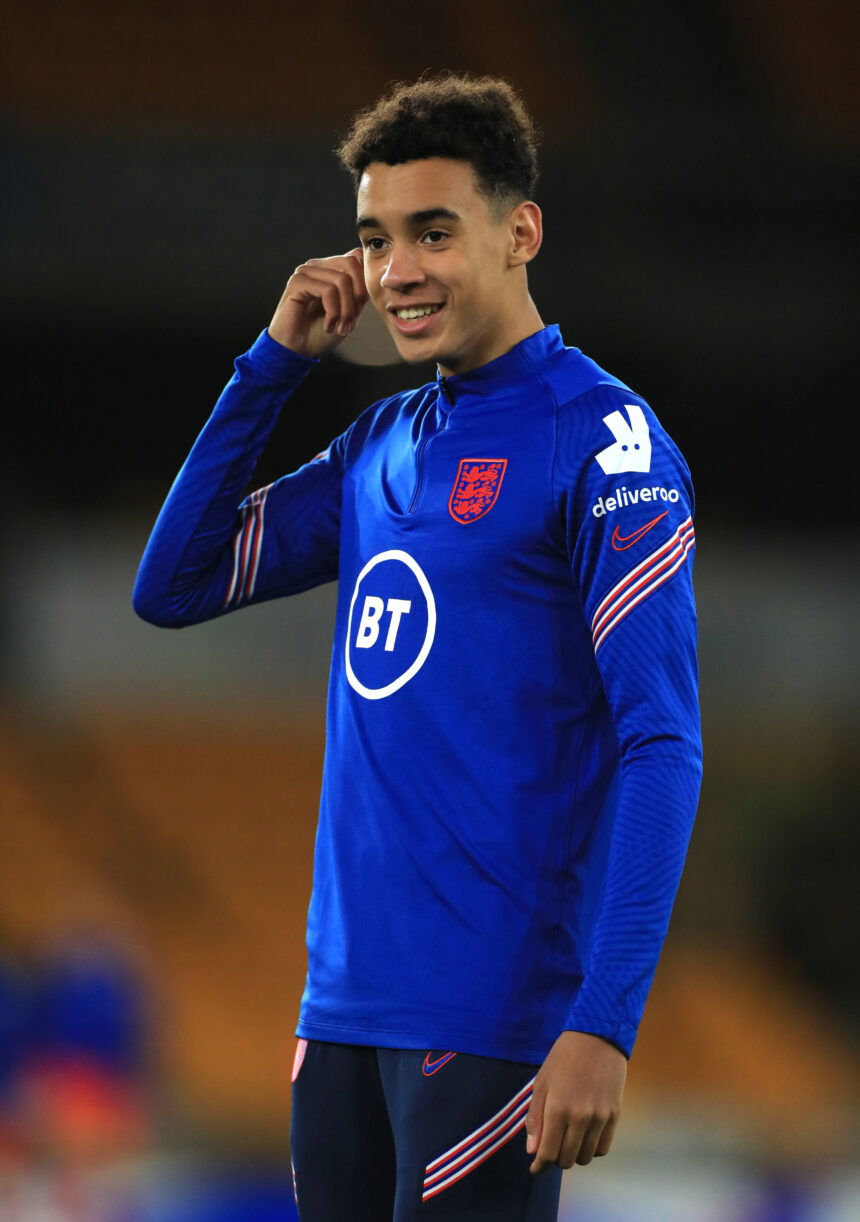
Almost starstruck by rubbing shoulders with Didier Drogba, John Terry and Petr Cech among others, Musiala was electric. No tournament, fixture or training session would be complete without his searing, ethereal talent taking centre stage. Tongues wagged across the country at this prodigious waif, and he was soon lighting up the same England U15s team alongside Jude Bellingham, now of Real Madrid. Against the Netherlands in one memorable December 2017 encounter, Musiala scored a hat-trick inside the first 25 minutes to help the Three Lions to a 3-2 victory.
A year later, and keen not to turn his back on the land of his birth, Musiala featured twice for Germany U16s, but it didn’t quite feel the same as England, who he would later captain at the same age group before going on to feature for the U17s and U21s.
In the end, Musiala spent eight years in England. By mid-2019, though, the 16-year-old and his family had a decision to make. In six months’ time, on January 31, 2020, the UK would officially leave the European Union and remove countless families’ right to live and work legally in the country, the Musialas among them. They might have been able to apply for residency, but it was complicated, time-consuming, and clarity was an impossible dream, despite Chelsea’s best efforts.
“There was a lot of uncertainty in our family,” Musiala later recalled. “Not about football, but about life. Brexit was about to take effect in the UK, and my mum was worried about how it could affect her career as an expat working in London. We couldn’t really get clear answers. It was stressful.”
So, yeah, blame Brexit. Sorry, England.
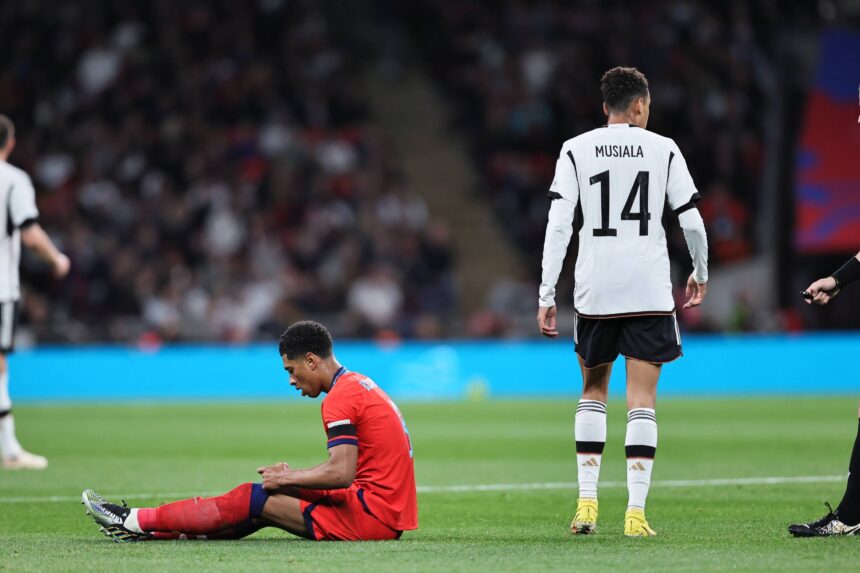
Blighty’s loss was Germany’s gain. Sensing their opportunity, Bayern Munich swooped. The six-time continental kings had been the club Musiala and sister Latisha felt most affinity to as a child, so when Die Roten happened across the teenager, having initially scouted the elder Hudson-Odoi, they didn’t flinch. For £170,000 to Chelsea, and a few presents for the family, Bayern had brought one of Europe’s most promising 16-year-olds “back home”.
“I should say our ‘first home’,” Musiala later recalled. “I loved England. I felt part English, if I’m honest. It’s never an easy decision to uproot your life like that, but it really felt like fate. Something about Bayern just felt natural.”
Yet, initially at least, he still felt like an outsider. Those eight years in Blighty meant he spoke only slang German, a world removed from what would be taught in schools. He again felt shy, timid and questioned whether it was right to be there. He lost weight, too, and tipped the scales at barely 60kg wet-through, not helped by a broken jaw he got during a practical session for a GCSE PE exam before leaving the UK. Bayern’s coaches wondered whether he was strong enough.
Extra training and work with a sports psychologist specialising in neuro athletics, the role the brain has in movement and performance, helped immeasurably. So did Miroslav Klose, his Bayern U17s coach and still Germany’s record goalscorer. The skill was there, but the diligence, the willingness to track back, defend and help the team wasn’t. Musiala himself readily admits he lacked the maturity at the time to realise why he had to do the dirty work, but Klose’s tough love proved the making of his star pupil.
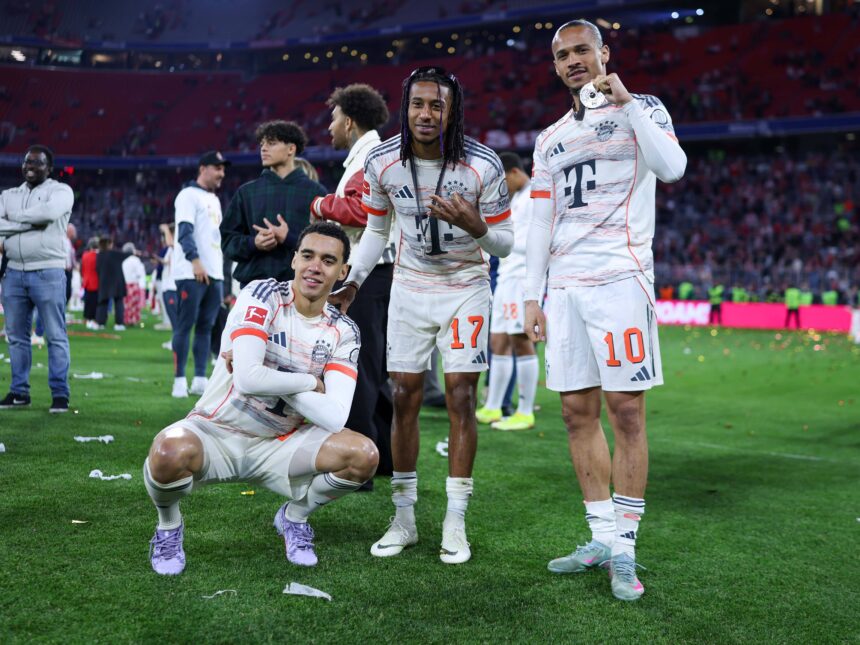
Within a year, in June 2020, Musiala became Bayern’s youngest Bundesliga player at 17 years and 115 days old, just three weeks after he had made his professional debut for Bayern’s third-tier reserves. At the height of the pandemic, in front of no crowds, he recalls being able to hear “Radio [Thomas] Muller” and nothing else. The nickname he received from Leroy Sane – from a similar background and something of a big brother – has long since stuck: Bambi.
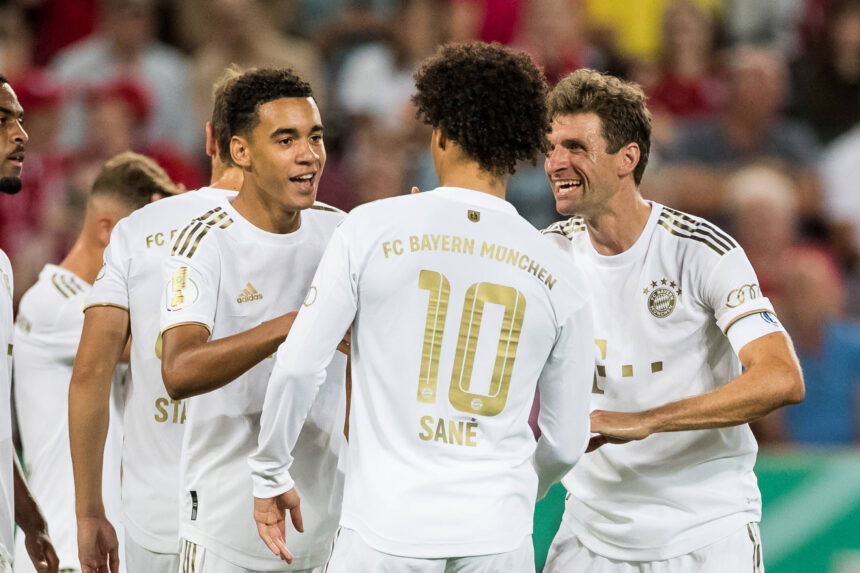
Though he scored in his second appearance – an 8-0 demolition of Schalke – to become Bayern’s youngest goalscorer in history, it was Musiala’s display in his 11th Bayern outing that he truly came of age. Die Roten were trailing RB Leipzig in December when Musiala replaced the injured Javi Martinez – a decade and a half his senior and a third his body weight heavier – after 25 minutes, but such was the teenager’s calming presence on the ball, he gave a struggling Bayern immediate control. Musiala scored inside six minutes, but his bravery on the ball stood out.
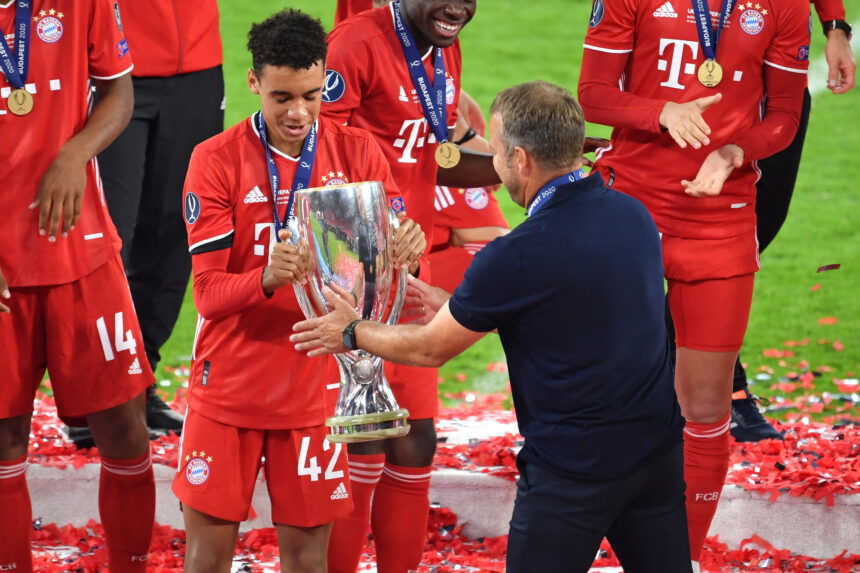
Increasingly trusted by Bayern boss Hansi Flick, Musiala’s maturity, talent, and in-game intelligence also impressed another important watcher. Joachim Low did a lot for German football, investing in youth to usher in a new cohort that won the 2014 World Cup, but it’s arguably the regular visits he made to Bavaria in late 2020 and early 2021 that will have the most significant long-lasting effect on the Mannschaft. Desperate for Musiala to choose the country of his birth over the one in which he’d spent most of his footballing education, Low explained in minute detail how he saw the youngster fitting into his team. “It was the only time in my time as national team coach that I made a promise to a player,” Low later recalled. “Even though he wasn’t a regular at Bayern, I told him that if he chose us, he would definitely be playing at Euro 2020 in the summer [of 2021].”
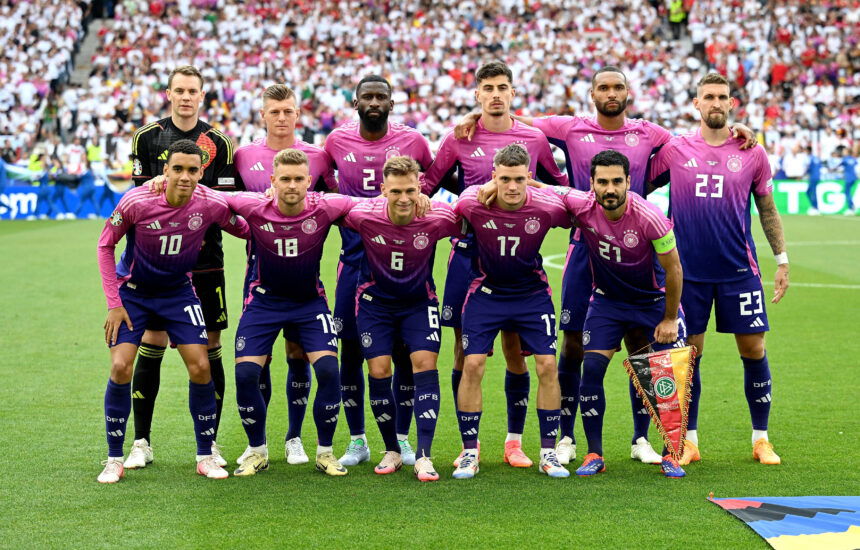
The charm offensive worked. By February 2021, Musiala confirmed his intention to represent Germany at the senior level and made his debut a month later with an 11-minute cameo in a 3-0 win against Iceland. At that summer’s Covid-delayed Euro 2020, he came off the bench to set up Leon Goretzka’s late equaliser in Germany’s 2-2 draw with Hungary, becoming the Mannschaft player to feature at a major tournament finals at 18 years, 117 days.
That Germany faced England in the last 16, the latter beating the former 2-0 in a raucous encounter that featured Musiala as a late substitute, felt inevitable.
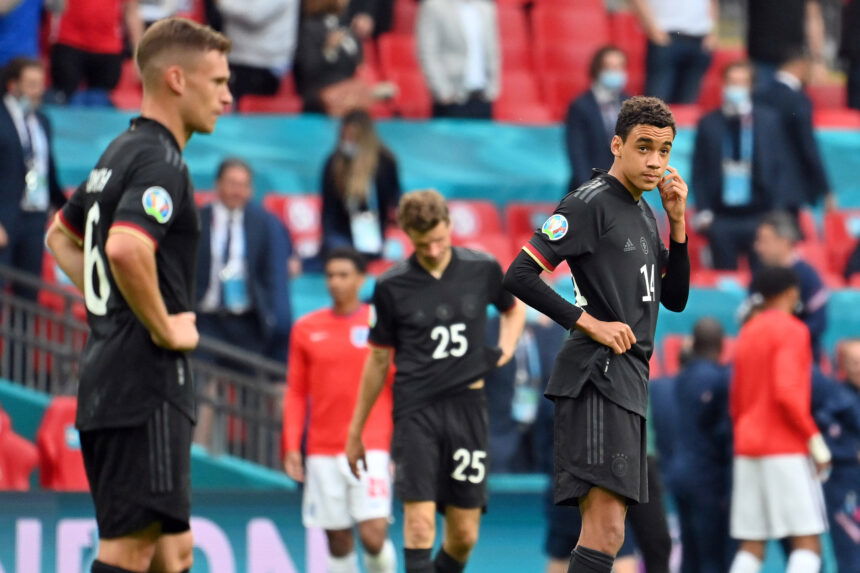
“I have a heart for Germany and a heart for England – both hearts will keep beating,” he later explained. “In the end, I just listened to my feeling that it was the right decision to play for Germany, the land I was born in.”
“I was just seven years old when I arrived in the UK, and I hardly understood a word. But the language of football and the kindness of the British people helped me with my integration. Even though I was different, a little boy, mixed background and couldn’t speak the language. They have always given me a feeling of being welcome.”
In the years since, Musiala’s star has been ever more in the ascendant. In April 2022, he came off the bench to seal Bayern’s 10th successive Bundesliga with a crisp finish in a 3-1 Klassiker defeat of Borussia Dortmund and, still only 19, by the end of the year had become the youngest Roten player to 100 senior appearances.
“He has unbelievable potential,” said then Bayern boss Julian Nagelsmann, who is now in charge of Germany. “It’s extraordinary. He has great finishing qualities. Unbelievable attacking qualities also in his dribbling with the ball. He justified my trust [in him]. He’s doing very well. He has the foundation for an outstanding career.”
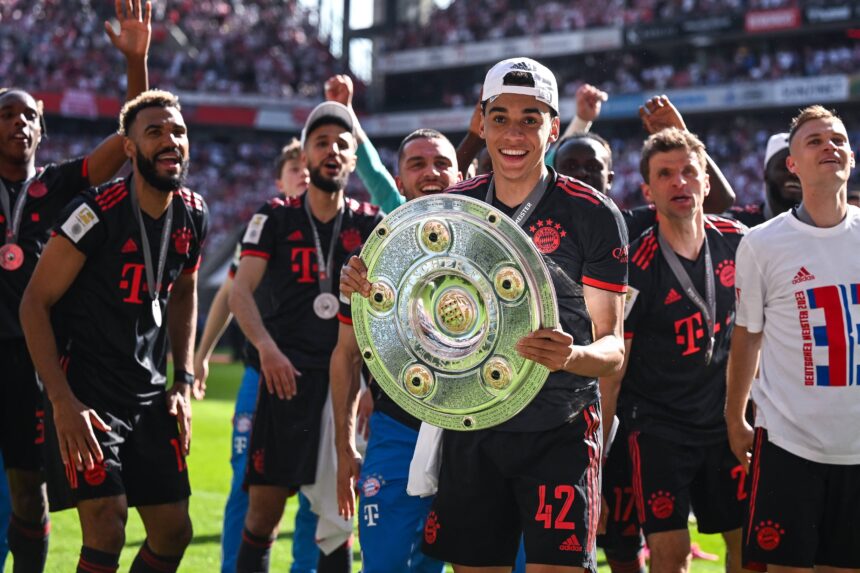
A season after that, in 2022/23, his 16 goals and as many assists in all competitions made him Bayern’s leading attacker as Thomas Tuchel’s midseason arrival helped overhaul Dortmund right at the last. The piece de resistance was another title-winning goal, this time on the final day of the season against Köln. It was also midway through that campaign that he picked up the ‘next Messi’ tag from former German international Matthaus as the sole bright spot in a group-stage World Cup exit in Qatar.
“Jamal’s already very good, but can become world-class,” said Bayern stalwart Joshua Kimmich. “He’s very advanced for his age. He’s full of tricks, unpredictable and also very dynamic when it comes to controlling the ball, especially with his first touch. He always tries to take the ball forward. He’s a very special player.”
And one that wants to get even better. Last season’s career-high goals return is proof of an increasingly clinical output, while Musiala himself has been open about his desire to have won “a few Champions Leagues” with Bayern and the World Cup with Germany by the time he turns 26 and approaching his peak. Next summer’s tournament, hosted in North America, represents the perfect opportunity for a young, hungry squad to come of age under the equally fresh-faced Nagelsmann.
Yep, Musiala is still only 21. And for England, the one that got away.
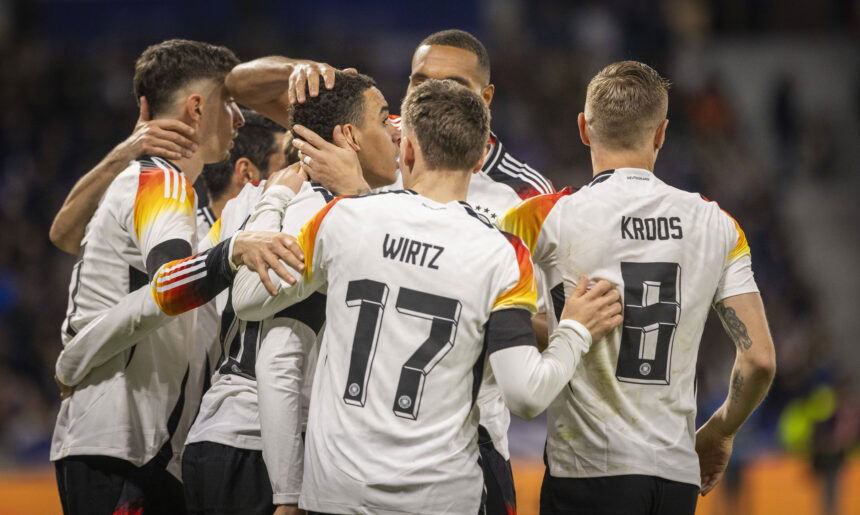
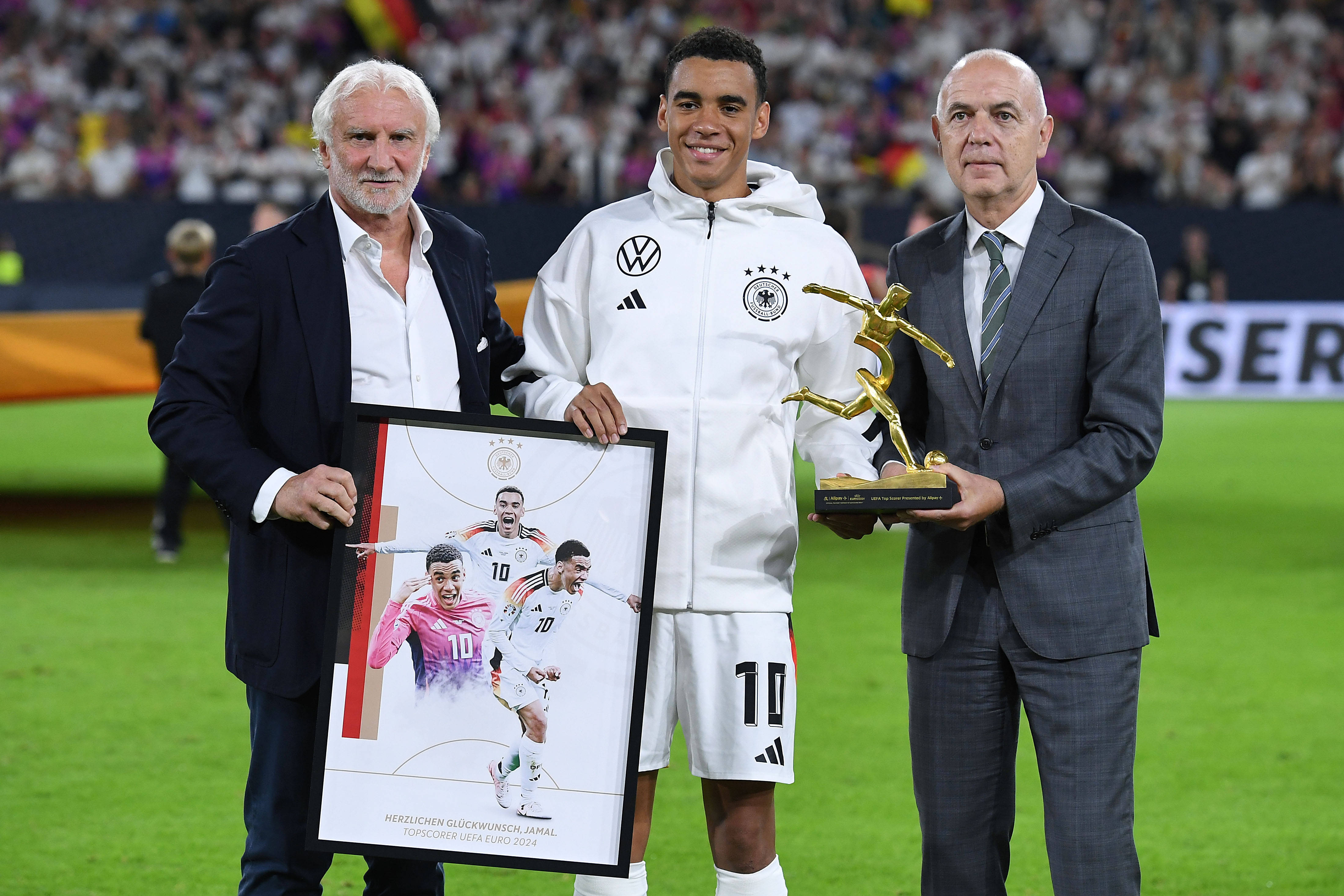
Cover photo: IMAGO / Revierfoto | Rudi Völler (Director of National Teams, Germany), Jamal Musiala (Germany), and Bernd Neuendorf (DFB President) before the UEFA Nations League match between Germany and Hungary at Merkur Spiel-Arena in Düsseldorf on September 7, 2024.